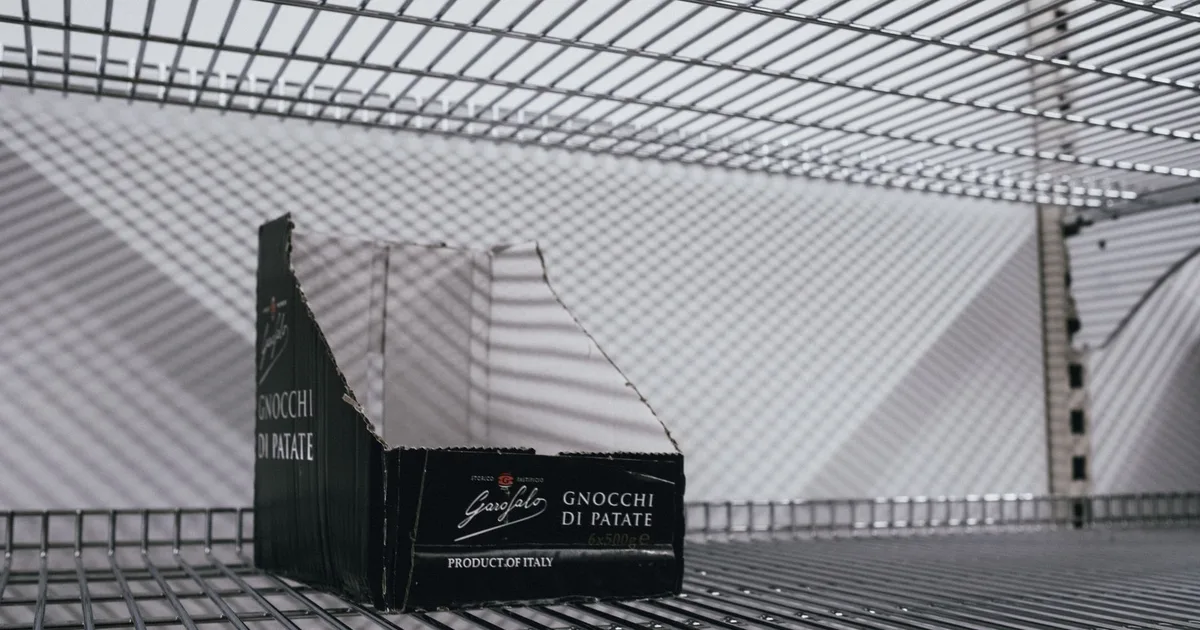
Damaged packaging on shelves usually starts in one of six places: knife cuts when opening cases, crushing from overfilled shelves, unstable stacking, products forced past dividers or into tight clearance, rough handling in the backroom, and shoppers pulling items from deep or tight shelves. Shoppers avoid dented, torn or dirty packs, so damage turns into unsold stock and waste.
Where damaged packaging on shelves starts
1. Case cutting
Blades slice the top of packs below. Fix: safety cutters with depth guards, cutting along the case's marked line, using tear strips on shelf-ready packaging. Clean case opening is also the first habit in fixing a shelf that looks messy after restocking.
2. Overfilled shelves
Squeezing in one more unit crushes boxes and bags. Fix: fill to the plan's units deep, not to the limit.
3. Tight clearance
Products forced under the shelf above bend or tear. Fix: finger space above every product; see shelf clearance problems.
4. Unstable stacking
Collapsing stacks dent cans and split cartons. Fix: stack only stable packs, low, as OSHA's rule on material storage expects.
5. Backroom handling
Dropped cases, heavy items on light ones, wet floors. Fix: clear backroom rules and storage by weight.
6. Shopper handling
Deep shelves force shoppers to drag packs out. Fix: keep products forward; risers on deep shelves.
What to do with damaged packs
- Remove them from the front of the shelf.
- Record the reason (cut, crushed, leak) so patterns show up.
- Follow the store's policy: markdown, return to supplier or waste.
Plan for packaging
Some packs are fragile by design: soft bags, thin cartons, glass. Planograms should give them enough clearance, no stacking and positions away from cart traffic. Shelf-ready trays protect products but add width and depth; plan with tray dimensions.
Damage is a process signal
Damaged packaging on shelves points to a process: cutting, filling, stacking or handling. Record the reason, fix that step, and waste drops. Wikipedia's shelf life article explains how damaged packaging can also shorten product life, and our planogram compliance audit checklist includes a condition check.
FAQ
What causes damaged packaging in stores?
Case cutting, overfilled shelves, tight clearance, unstable stacks, backroom handling and shoppers pulling packs from deep shelves.
Should damaged products stay on the shelf?
No. Remove them and handle them according to store policy: markdown, return or waste.
How can stores reduce packaging damage?
Use safety cutters, fill to planned depth, leave finger space, stack carefully and organise the backroom.
Do shoppers avoid damaged packs?
Yes. Dented, torn or dirty packs are usually left on the shelf, which leads to waste.


