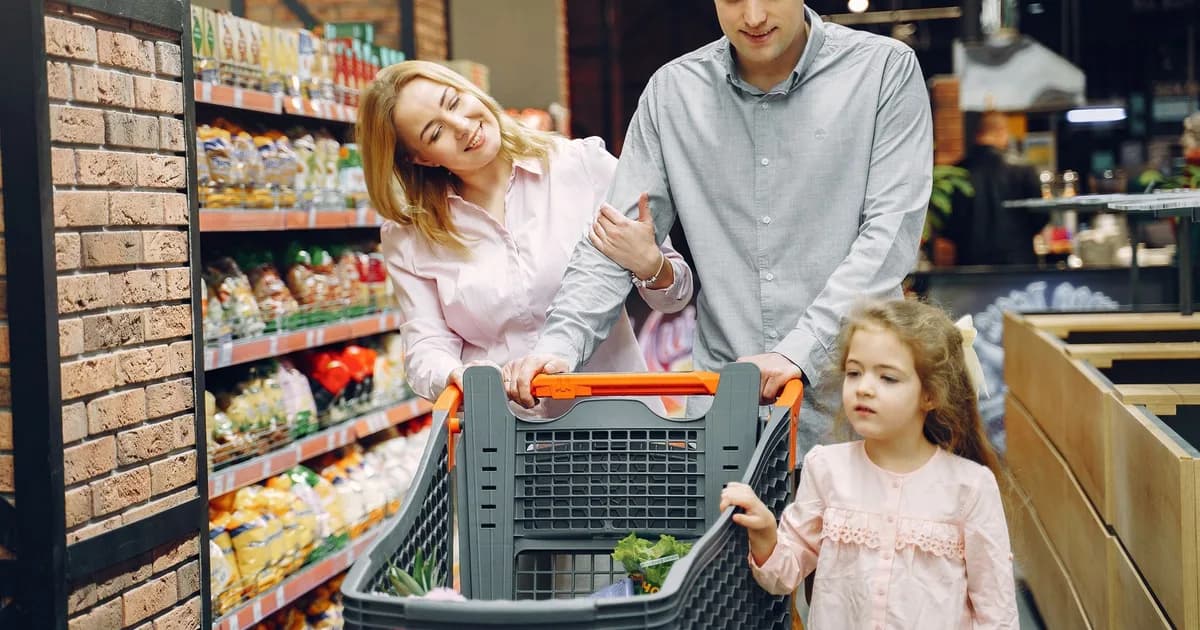
Baby care aisle planogram planning has to account for a shopper who is often time-pressed, sometimes shopping with an infant in tow, and frequently making decisions with a higher trust bar than a typical grocery purchase — diapers, formula, and feeding products aren't impulse categories most shoppers browse casually.
What shapes this category's planning
The shopper is often genuinely time-constrained. A parent shopping with a baby or toddler is less able to browse at leisure than most shoppers, which puts a premium on fast, intuitive navigation over a layout that rewards careful comparison shopping.
Trust and brand loyalty run unusually high. Many shoppers in this category — particularly for formula and sensitive-skin products — are reluctant to substitute, having found something that works for their specific child. A layout that assumes easy brand switching the way it might in a more interchangeable category misreads this shopper's actual decision process.
The category spans genuinely different sub-missions. Diapers and wipes are a fast, routine restock. Formula is often a trust-anchored, non-negotiable purchase. Feeding and development products involve more comparison and research. Treating the whole category with one undifferentiated layout logic underserves at least some of these missions.
Size and stage variation within sub-categories is extensive. Diapers alone span multiple size tiers tied to a child's age and weight, each needing clear, fast-to-navigate signage — a shopper under time pressure can't afford to hunt across a poorly labeled run of similar packaging.
Planning around these realities
- Prioritize fast, unambiguous navigation above all else. Clear, large, easy-to-scan signage for size and stage differentiation matters more here than in categories where a shopper has more patience to browse.
- Treat formula and other trust-anchored sub-categories with extra care around consistent availability, since a stockout in this specific sub-category is a more serious failure for the affected shopper than a routine out-of-stock elsewhere.
- Don't assume private label substitution works the same way here as in more interchangeable categories — trust and prior success with a specific product carries more weight for many shoppers in this category than price alone.
- Keep the category's distinct sub-missions logically separated, so a shopper on a fast diaper-and-wipes restock trip isn't forced to navigate past a more considered, research-driven sub-category to get what they need.
This pairs naturally with pet care aisle planogram, which tackles a closely related piece of the same problem. This overlaps with household cleaning aisle planogram, which is worth checking if that's also part of your situation. A closely related question is frozen aisle around meal occasions, which tends to come up around the same time.
FAQ
Should baby care facings prioritize velocity the same way other categories do?
Velocity still matters, but for trust-anchored sub-categories like formula, minimizing stockout risk can reasonably take priority over maximizing space efficiency, given how consequential an unavailable product is for that specific shopper.
Does private label perform as well in baby care as in general grocery?
It varies significantly by sub-category — private label often performs reasonably in diapers and wipes, while facing more resistance in formula and sensitive-skin products where trust and prior success weigh heavily on purchase decisions.
How important is signage specifically in this category compared to others?
Unusually important — given the time-pressed nature of the typical shopping trip and the need to correctly match size and stage, clear signage does more work here than in categories where shoppers have more patience to read packaging carefully.


