How to create a planogram for a small store: measure each shelf, list your 20–30 best sellers from sales or stock records, put the fastest ones at eye level, heavy items at the bottom, give best sellers two or more facings, and write the plan on one page per fixture that any staff member can follow. You do not need specialist software to start.
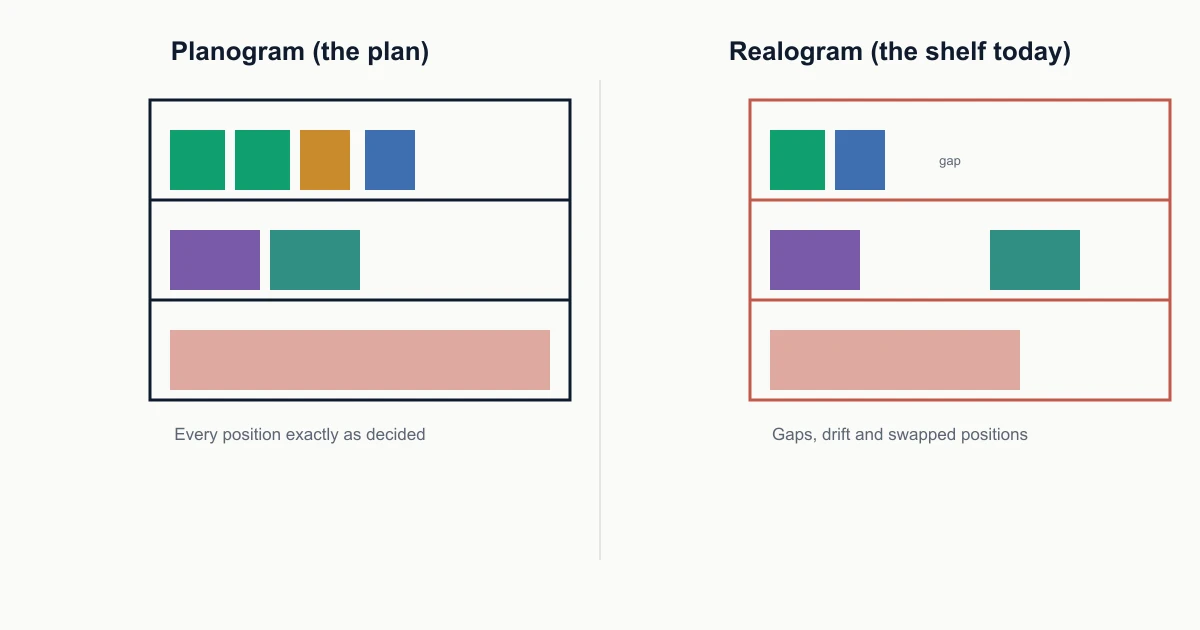
Small stores have one advantage over chains: the owner knows what sells. The planogram simply writes that knowledge down so the shelf stops changing every time someone restocks it.
How to create a planogram for a small store: one fixture first
Pick the fixture that sells the most, often the drinks cooler, the snacks shelf or the wall behind the counter. Get that one right and use it as the model for the rest. Trying to plan every shelf in one weekend usually ends with nothing finished.
Measure what you actually have
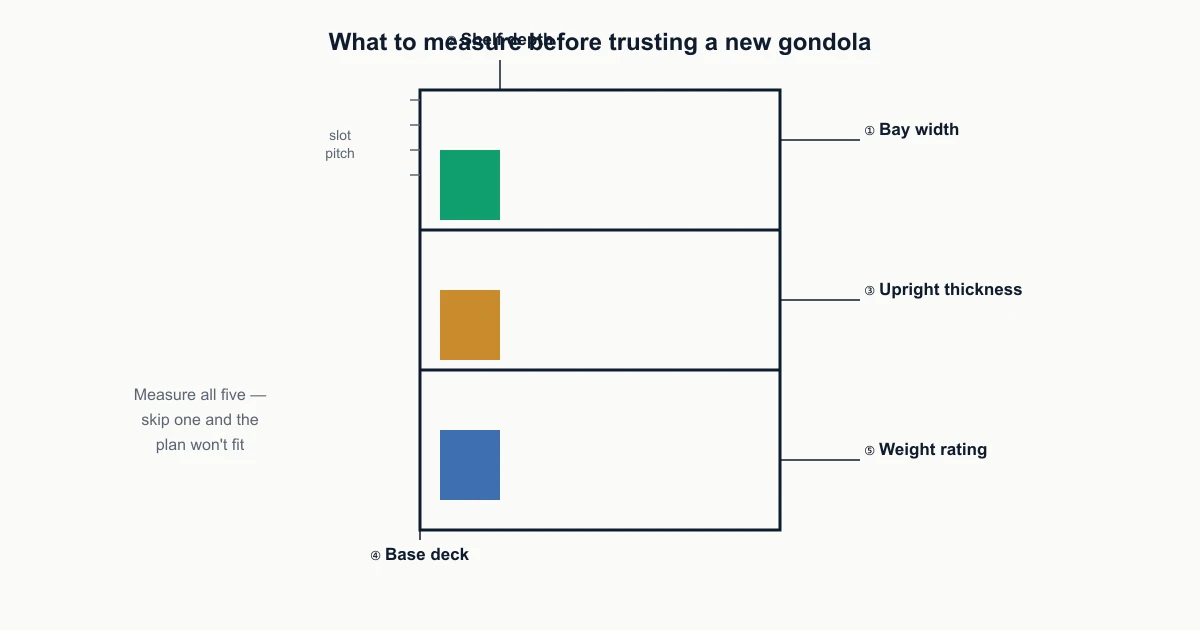
For the chosen fixture, note:
- width of each shelf (inside the uprights)
- depth
- gap between shelves
- number of shelves, and whether they can move
A typical small-shop wall section might be 90 cm (35 in) wide with five shelves 30–40 cm deep. Write the numbers on a sketch. They decide how many facings fit, and you can check the maths with the shelf capacity calculator.
List what sells, from your own records
You do not need a sophisticated system. Use one of:
- POS sales report for the last four weeks
- supplier invoices (what you reorder most often)
- a simple tally: which items you refill daily, weekly, rarely
Sort products into three groups: fast, steady and slow. That is enough to plan.
Place by how customers shop and lift
A small-shop shelf follows a few simple rules:
- Eye level (roughly 120–160 cm, 47–63 in): fast sellers and items with good margin.
- Waist level: steady sellers and items people come in for anyway.
- Top shelf: light, slower items.
- Bottom shelf: heavy and bulky items, such as 5 L oil or 10 kg flour, which are safer to lift from low down.
Keep related items together: tea next to sugar, cooking oil next to spices. Customers in small stores often shop by need, not by brand.
Give facings to the fast sellers
A fast seller with one facing empties quickly and looks out of stock. Give the top sellers two or three facings, steady sellers one or two, and slow sellers one. If space runs out, cut the slowest items before cutting facings from the fastest. Our guide to product facings explains the case-pack rule behind this.
Write it down on one page
The planogram for a small store can be a simple table:
| Shelf | Products left to right (facings) |
|---|---|
| 1 (top) | Tea 200 g (2), green tea (1), spices (5 × 1) |
| 2 | Biscuits A (3), biscuits B (2), rusk (2) |
| 3 (eye level) | Cooking oil 1 L (3), sugar 1 kg (3), salt (2) |
| 4 | Rice 1 kg (2), lentils (4 × 1) |
| 5 (bottom) | Flour 10 kg (2), oil 5 L (2) |
Print it, tape it inside a cabinet door or keep it on your phone, and ask staff to restock to it. Free templates and a free planogram maker help if you want it drawn to scale.
Use your suppliers
Beverage, ice cream and snack companies often provide planograms for their own coolers and racks. Follow them where the equipment is theirs, but make sure the layout fits your shoppers. If your customers buy mostly small packs, ask the supplier to adjust.
Review monthly, change one thing at a time
After a month, check which items ran out and which barely moved. Move one or two things, give an extra facing to the products that kept running out, and update the page. Small, regular changes beat a full redesign every year.
Write down what you already know
Knowing how to create a planogram for a small store is less about tools and more about discipline: measure the shelf, put fast sellers where people look, keep heavy things low, and write it down so the shelf stays that way. Even a one-page plan will cut gaps and save restocking time. Wikipedia's planogram overview is a short read if you want the background, and GS1's measurement standard explains how product sizes are measured if you start drawing to scale.
FAQ
Do small stores need planograms?
Not complex ones, but a simple written plan for each main fixture keeps best sellers visible, reduces gaps and makes restocking faster for anyone on shift.
What should go at eye level in a small shop?
Your fastest-selling and best-margin products. Customers see eye level first, so it should hold the items most people come in for.
Can I make a planogram without software?
Yes. A measured sketch and a table of products and facings per shelf is a working planogram for a small store.
How many products should be on each shelf?
As many as fit with enough facings for your fast sellers. If a best seller keeps running out, give it more facings before adding new products.