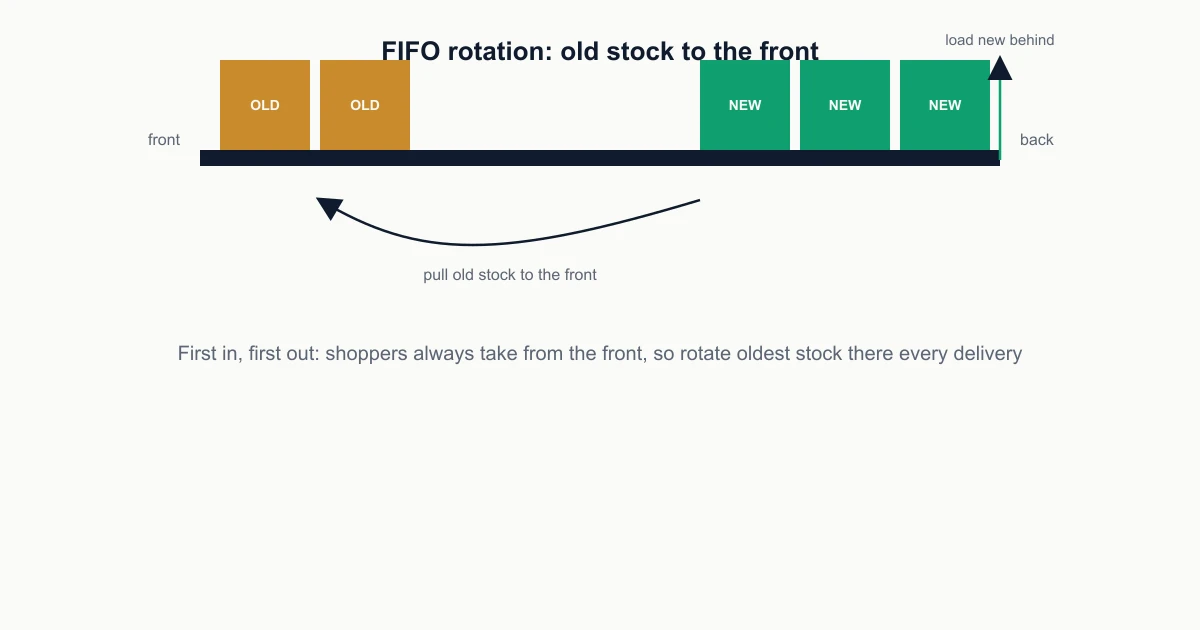
How to rotate stock in a cooler: before adding new stock, pull the units already in the row to the front, then place new stock behind them, so the oldest sells first (first in, first out, or FIFO). In walk-in coolers, load from the back and let gravity shelves push older stock forward. Check dates at the back of each row weekly, and don't give slow items more depth than they sell within their date.
Rotation matters most for dairy, juices and fresh grab-and-go food, but even long-life drinks look neglected when old stock lingers.
How to rotate stock in a cooler in five steps
- Pull forward: move existing units to the front of the row.
- Check dates: remove anything out of date; set aside short-dated items for markdown.
- Load behind: new stock goes behind the older units.
- Face up: labels forward, rows straight.
- Close the door between trips to keep the cabinet cold.
Fixture by fixture
| Fixture | Best rotation method |
|---|---|
| Reach-in cooler | Pull forward, load behind from the front |
| Walk-in cooler / cold vault | Load from the back; gravity shelves move stock forward |
| Open deck chiller | Pull forward, load behind; check dates daily |
| Chest freezer | Older stock to the top and front of each basket |
Walk-in rotation is easiest; see cold vault merchandising.
Capacity makes rotation possible
If a row holds weeks of stock for a slow product, rotation becomes impossible because staff can't reach the back. Keep units deep in line with sales and shelf life; see how to calculate days of supply.
Oldest out first, every time
Knowing how to rotate stock in a cooler is mostly habit: pull forward, check dates, load behind and keep depth realistic. Done every refill, it prevents the expired-stock surprises covered in expired drinks at back of cooler. Wikipedia's shelf life article explains why dates matter, and Wikipedia's facing article the facing step.
FAQ
What does FIFO mean in coolers?
First in, first out: older stock sits at the front and sells before newer stock.
How do you rotate stock in a reach-in cooler?
Pull existing units forward, check dates, then load new stock behind them.
Why are walk-in coolers easier to rotate?
They are loaded from the back, so new stock naturally sits behind older stock.
How often should cooler dates be checked?
Daily for fresh and chilled food, weekly for long-life drinks, adjusted to shelf life.