Lottery is one of the few in-store product categories where a lottery ticket display layout is shaped more by regulatory and security requirements than by normal merchandising principles. Age-restriction rules, cash handling, and loss-prevention concerns around a high-value, easily concealed product come before facing order or visual appeal in almost every jurisdiction that sells it.
Why placement is usually locked to the counter
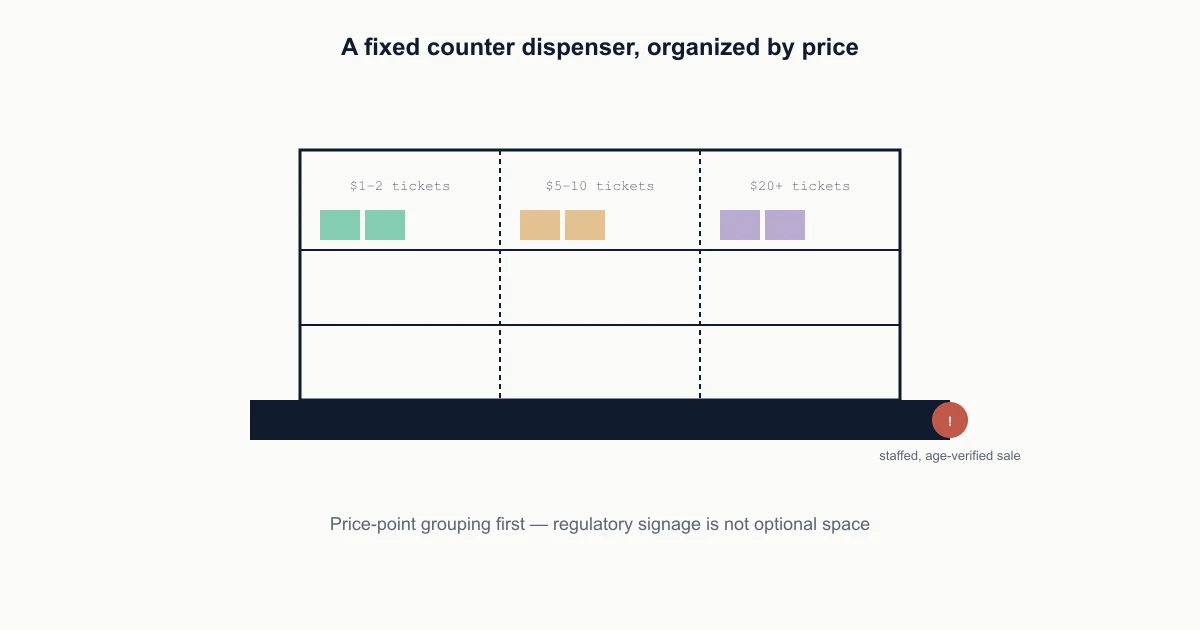
Scratch tickets and lottery dispensers are typically positioned behind or immediately beside the staffed checkout counter, not on open shelving, because staff oversight during the sale is a compliance requirement in most jurisdictions, not just a loss-prevention preference. This largely removes placement as a merchandising variable — the layout question becomes how to organize the fixed counter space that's available, not where in the store the category should live.
Organizing the dispenser face within that fixed space
Within the counter dispenser, grouping by price point (lower-cost tickets together, higher-cost tickets together) tends to work better than grouping by game theme, since price point is usually the first thing a repeat player is deciding on. Clear, legible pricing on each dispenser slot matters more here than almost any other small-format category, since staff are reading it off quickly during a transaction, often under time pressure from a queue.
Operational realities that shape the layout
- Jackpot-driven demand spikes hit specific games hard and unpredictably — a layout with some flexibility to temporarily prioritize a high-demand game's dispenser slot, without restructuring the whole counter, handles these spikes better than a rigid fixed layout.
- Restocking and roll changes happen under staff time pressure during live transactions, so dispenser mechanisms that are quick and intuitive to reload matter as much as the visual layout itself.
- Signage disclosing odds and age restrictions is typically mandatory, not optional merchandising copy — it needs its own planned, visible position rather than being squeezed in wherever there's leftover space.
- End-of-game or discontinued ticket types need prompt removal from the dispenser, since an expired or ended game displayed for sale is both a compliance issue and a shopper frustration when a ticket they select turns out to be unavailable.
Worth checking next: magazine and book rack planogram, which covers a closely related part of the same decision.
FAQ
Who decides the lottery ticket display layout — the store or the lottery operator?
It's usually a shared decision, with the regulatory and security requirements set by the operator or jurisdiction and the store adapting its counter space and staff workflow around them, rather than designing the layout independently the way it would for most other categories.
Does lottery need its own planogram separate from the rest of the checkout area?
Generally yes — the compliance requirements are specific enough to the category that treating it as part of a general checkout planogram tends to miss details that matter, like age-verification signage placement and secure dispenser mounting.
How often does the lottery layout need to change?
Less often structurally than most categories, since the physical dispenser setup is usually fixed — most of the ongoing work is restocking, roll changes and keeping pricing current, not redesigning the layout itself.