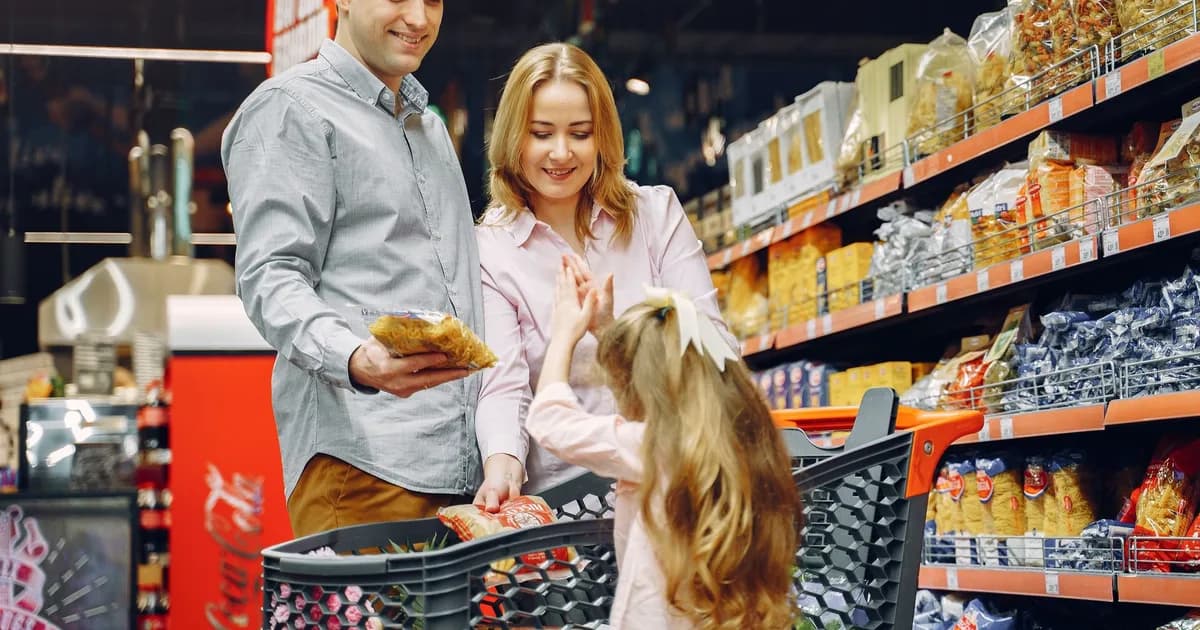
Pasta and sauce are one of the clearest adjacency wins in the whole store — shoppers buying one are usually buying the other in the same trip. A pasta and sauce aisle planogram that treats them as two unrelated categories, planned independently and bolted together at the end, misses an obvious, low-effort sales lift that costs nothing to capture.
Lining up shape with sauce type
Long pasta (spaghetti, linguine, fettuccine) pairs most naturally with smoother sauces, while short and tube shapes (penne, rigatoni, fusilli) pair with chunkier sauces that cling to ridges and hold inside tubes. Planning the sauce block so its sub-sections roughly line up across the aisle from the matching pasta shape block — even without a literal cross-display — shortens the mental work for a shopper comparing options on both sides.
Where cross-merchandising earns its keep
A small cross-merchandised end or shelf-edge call-out (a few jars of a popular sauce near the pasta block, or a few boxes of pasta near the sauce block) captures the shopper who forgot one half of the pairing, without duplicating full facings across both locations. This works best as a light touch — a handful of SKUs, not a parallel planogram — because overdoing it just creates two half-stocked sections instead of one well-stocked one.
Planning the rest of the aisle around the two anchors
- Dry pasta needs depth planning for box size variance — small single-serve boxes, standard 500g boxes and large family bags all behave differently on the same shelf, and bags in particular need a shelf lip so they don't slump forward.
- Jarred sauce is heavy relative to its footprint, so weight limits on the shelf and bracket matter more here than in most dry grocery sections — check load ratings before planning a full-depth, fully-faced jar block.
- Specialty and gluten-free pasta earns a clearly signed sub-block rather than being scattered through the standard range, since shoppers buying it are specifically searching for it and won't necessarily scan the whole aisle.
- Pasta sauce mix (seasoning packets) is a smaller, easy-to-miss format that often gets squeezed out when jarred sauce facings expand — worth protecting a minimum facing count for it rather than letting it drift to zero.
If this is a recurring issue in your stores, coffee and tea aisle planogram covers a closely related angle worth checking. See baking aisle planogram for a related breakdown that often comes up alongside this. This pairs naturally with school and office supplies aisle planogram, which tackles a closely related piece of the same problem.
FAQ
Is cross-merchandising pasta and sauce worth the extra shelf-edge labels?
For most stores, yes — it's a low-cost way to capture a forgotten-item sale, and the extra labeling effort is minor compared to the lift. It's worth tracking sales specifically from the cross-merchandised facings to confirm it's earning its keep locally.
Should pasta and sauce always be adjacent aisles?
It's the strongest default, but not universal — some stores split dry pasta into a broader "pantry staples" aisle and jarred sauce into a broader "condiments and sauces" aisle for other structural reasons. When that's the case, a clear directional sign and a small cross-merchandised pocket matter even more.
How do you plan for sauce flavor trends that shift seasonally?
Hold a small flexible block for trending or seasonal flavors rather than fully fixing every facing, so a rising flavor doesn't need a full reset to earn space it's already proven it deserves through sales.


