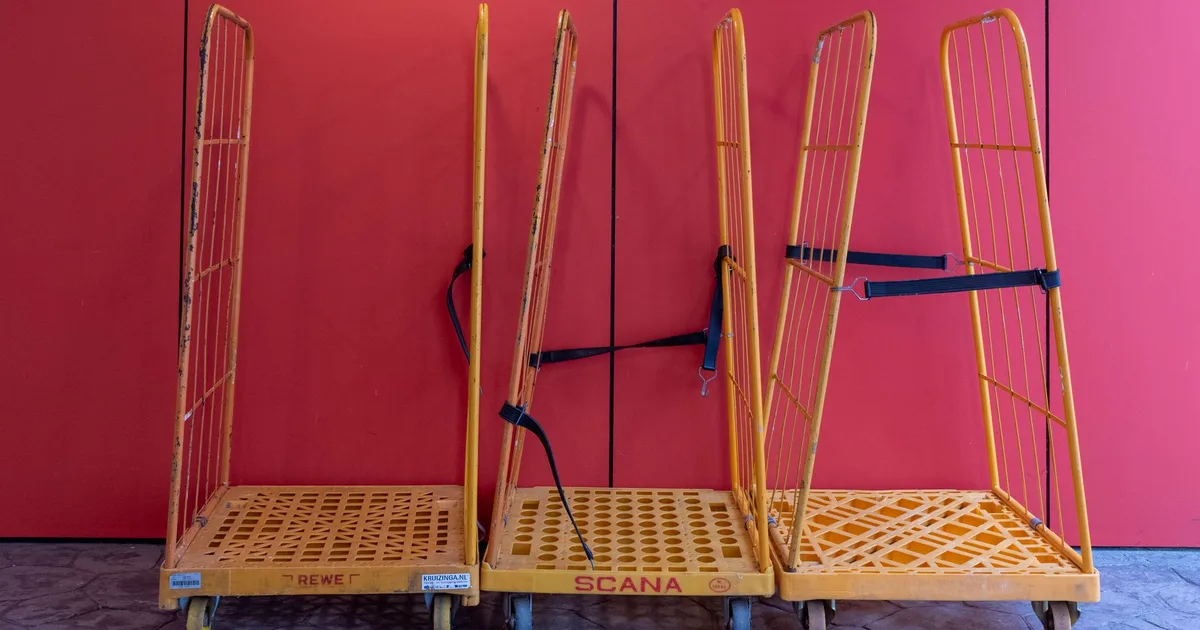
A reset crew that arrives to find there aren't enough carts, the right shelf hardware, or the fixtures the plan specified doesn't just lose the time it takes to track down what's missing — they lose momentum. A reset that starts with a 45-minute scramble for equipment rarely recovers the pace it needed to finish on schedule.
Why equipment shortages happen on reset day specifically
Equipment problems are almost never about equipment not existing somewhere in the building — they're about it not being staged in the right place at the right time. Carts get borrowed by another department and not returned. Shelf pins and brackets from the last reset get swept up and thrown out instead of saved. A fixture ordered for the reset arrives a day late, or arrives but nobody checked it against the plan before reset day.
The common thread is that equipment prep is treated as something that happens "whenever," rather than a scheduled task with its own deadline ahead of the reset itself.
What a missing-tools shortage actually costs
The direct time loss is obvious — someone has to go find or request what's missing, often from a store manager or another department who isn't expecting the interruption. The less obvious cost is that crews under this kind of pressure start improvising: using whatever shelf hardware is on hand instead of what the plan specifies, or skipping a fixture component entirely rather than waiting for it, both of which quietly introduce their own compliance gaps.
Preventing it before reset day
Treat equipment staging as its own checklist item, separate from the reset plan. The planogram tells you what goes where; it doesn't tell you whether enough carts and pins exist to build it. That's a separate confirmation, due before reset day, not assumed as part of "someone will handle it."
Verify fixture deliveries against the plan before reset day, not during it. A new shelf, bracket, or sign holder that arrives the morning of the reset — and turns out to be the wrong size or missing a part — is a problem discovered far too late to fix cleanly.
Keep a standing reset kit, not a rebuilt-from-scratch one every time. Shelf pins, basic brackets, and common hardware that gets reused across resets should have a dedicated, protected storage spot — not get swept into general store supplies where they're liable to go missing before the next reset.
Confirm crew size against the actual job, not a standard headcount. A crew sized for a routine category reset will fall behind fast on a larger or first-of-its-kind reset, equipment shortages or not.
This is closely tied to shelf talkers missing, and the two often need to be solved at the same time. If this is a recurring issue in your stores, reset crew running out of time covers a closely related angle worth checking. See missing shelf labels after reset for a related breakdown that often comes up alongside this.
FAQ
Who should be responsible for confirming equipment is staged before a reset?
This works best as an explicit, named responsibility — often the store manager or a designated reset lead — rather than an assumed task that falls to whoever notices first (or doesn't).
How far in advance should fixture deliveries be checked against the plan?
At least a few days before the reset, so there's time to resolve a wrong or missing part without delaying the reset itself.
Is it worth keeping a dedicated reset equipment kit even for infrequent resets?
Yes — infrequent resets are exactly where equipment is most likely to have been borrowed, lost, or thrown out since the last time it was needed, since there's no routine habit keeping it in place.


