Shelf-ready packaging (SRP) is designed to go straight from the case to the shelf, with the case itself becoming part of the display — no individual unboxing required. When it doesn't fit the planogram it was supposed to slot into, the mismatch is usually a dimension or format issue baked in long before the case reaches the store.
What causes the SRP-to-planogram mismatch
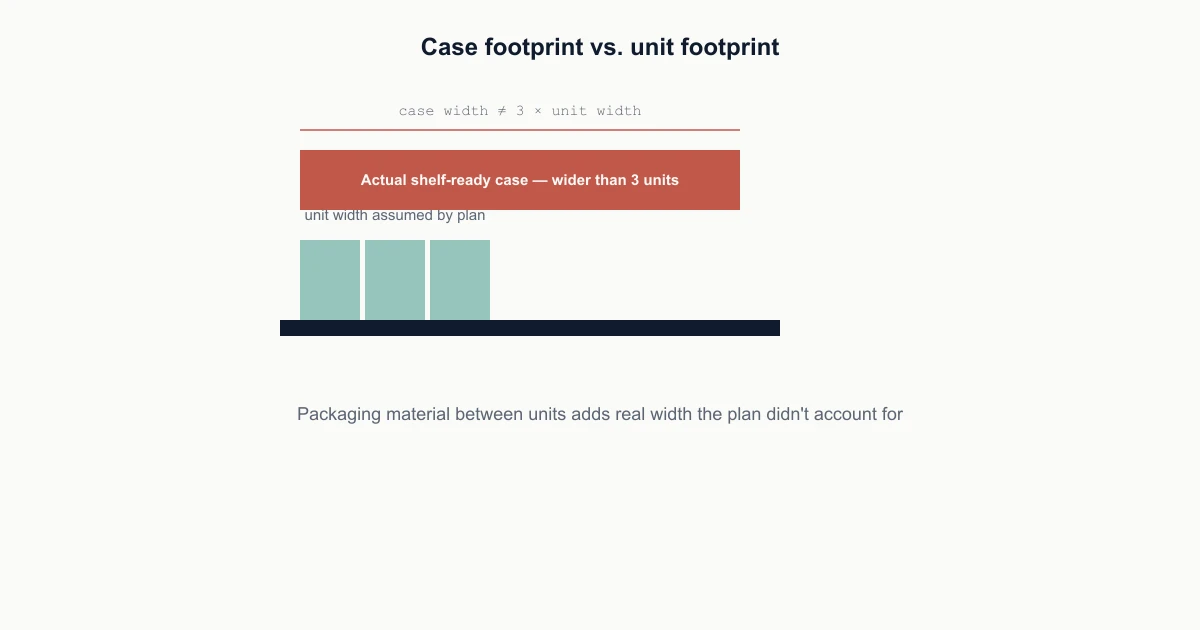
The planogram was built from unit dimensions, not case dimensions. A product's individual width and height might fit the plan perfectly, but the shelf-ready case holding several units together has its own footprint, which can be wider, deeper, or taller than a simple multiple of the individual unit's dimensions once packaging material is accounted for.
The case format assumes a different shelf depth or clearance than what's actually available. SRP trays are often designed around a general retail shelf standard, not the specific depth and clearance of every fixture it might end up on — a case that fits a standard grocery gondola can be too deep or too tall for a convenience-format shelf.
The opening or display mechanism needs space the planogram didn't account for. Some SRP formats require a flip-top lid, a removable front panel, or a tray that needs to be pulled partway out to display properly — if the planogram's facing depth assumed a sealed case footprint only, the functional display state may not fit.
Multiple SRP cases side by side don't total the facing count the plan expected, because case width includes packaging material between units, not just the units themselves — a plan calculated from pure product width can overstate how many cases actually fit the bay.
Why this causes a specific kind of reset-day problem
Unlike a straightforward product-too-large issue, an SRP mismatch often isn't obvious until the case is actually opened and placed, because the individual product dimensions in the plan were correct all along — it's the case format wrapping those units that doesn't match. This means the mismatch tends to surface mid-reset, when there's limited time to improvise a fix.
Preventing it before the reset
- Get case-level dimensions from the supplier, not just unit dimensions, before finalizing facings for any shelf-ready format.
- Confirm the case's functional display footprint, not just its sealed shipping footprint — account for whatever opening mechanism the format uses.
- Test-fit a sample case against the actual fixture before the full reset, especially for a new SRP format or a format being introduced to a new store type.
- Flag SRP-specific formats explicitly on the planogram so the reset crew knows to treat that category's facing math differently from standard individually-stocked items.
See damaged packaging on shelves for a related breakdown that often comes up alongside this. This pairs naturally with training staff to read a planogram, which tackles a closely related piece of the same problem. This overlaps with distribution vs shelf visibility, which is worth checking if that's also part of your situation.
FAQ
Does shelf-ready packaging always come in standard sizes?
No — SRP formats vary significantly by supplier and product category, which is exactly why case dimensions need to be confirmed for the specific product, not assumed from a general SRP standard.
Who typically provides case-level dimensions for planogram planning?
The supplier or manufacturer is usually the source, since they control the packaging design — retailers and planners generally rely on supplier-provided specifications rather than measuring independently.
What's the simplest way to catch an SRP mismatch before reset day?
A physical test-fit of a sample case on the actual fixture, done ahead of the full reset, catches most dimension mismatches that pure spec-sheet math can miss.


