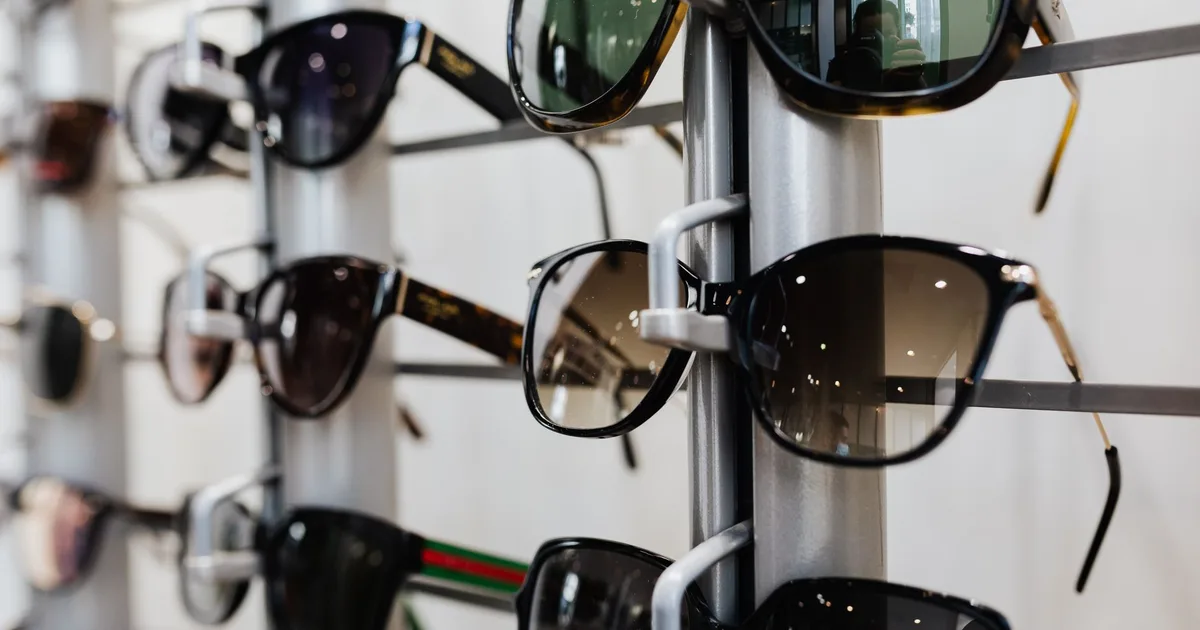
A sunglasses display rack planogram plans a rack (usually a spinner or a tall, narrow tower) where each pair sits in its own slot or hangs from its own clip. It groups frames by style and price tier, keeps the most popular styles at eye level, adds a mirror so shoppers can try them on, secures the rack against theft and times the display for the sunny season.
Sunglasses are a try-on purchase. A rack with no mirror, or with frames too high to reach, loses sales.
Faces and price tiers
| Face or column | Content |
|---|---|
| A | Best-selling styles, middle price |
| B | Sport and wraparound |
| C | Fashion and oversized |
| D | Children's, entry price |
Price tiers go top to bottom or face by face, but keep them consistent so shoppers aren't surprised at the till.
Six rules for a sunglasses display rack planogram
- One pair per slot, so gaps are visible.
- Most popular styles at eye level.
- Mirror on the rack at face height.
- Price labels on each slot or a clear tier sign.
- Security: locking rods or the rack in staff view.
- Seasonal timing: go up before the hot season, come down or shrink after it.
Spinner or tower?
Spinners hold many pairs in a small footprint; towers suit narrow spaces near the entrance. For spinner rules like weight balance, see spinner rack planogram. For seasonal timing, see planogram for seasonal products.
Try-on space is part of the plan
A sunglasses display rack planogram sells when shoppers can see styles at eye level, check the price and try a pair in the mirror, while the rack stays secure. Wikipedia's shoplifting article explains why small, valuable items need protection.
FAQ
How should sunglasses be displayed?
By style and price tier, one pair per slot, popular styles at eye level, with a mirror.
Why does a sunglasses rack need a mirror?
Shoppers want to try them on before buying.
How do you prevent sunglasses theft?
Use locking rods or keep the rack in staff view.
When should a sunglasses display go up?
Before the hot season, reduced or removed after it.