What is an end cap in retail? It is the shelving unit across the end of an aisle, facing the main walkway, that most shoppers pass even if they never enter the aisle. Because of that visibility, end caps are usually used for promotions, seasonal products and new launches, and space on them is often negotiated or paid for by suppliers.
You will see it written as end cap, endcap or aisle end. Wikipedia's endcap entry notes other names too, such as gen-end.
What is an end cap in retail, compared with the aisle?
| In-aisle shelf | End cap | |
|---|---|---|
| Who sees it | Shoppers who enter the aisle | Most shoppers walking the main path |
| Purpose | Range: the full category | Focus: a few products or one message |
| Change frequency | Once or twice a year | Every few weeks |
| Products | Many SKUs, few facings each | Few SKUs, deep stock |
That last row is the core of end cap planning: fewer products, more stock of each.
Six rules for an end cap that sells
- One message. A promotion, a season or a launch, not all three. A shopper passing at walking pace should understand it in a glance.
- One hero product, stocked deep. Fill the eye-level shelves with it. A half-empty end cap looks like a clearance bin.
- Add a partner, not a range. Pasta with sauce, crisps with dip. Cross-merchandising raises basket size without diluting the message.
- Price where people look. Signage at eye level, not hidden behind stock or at floor height.
- Stock for the promotion, not the normal rate. Promotional sales can be several times normal; plan capacity and backroom stock accordingly.
- Link to the home shelf. Keep the product on its normal shelf too, so shoppers who see it in the aisle can still buy it.
Planning an end cap planogram
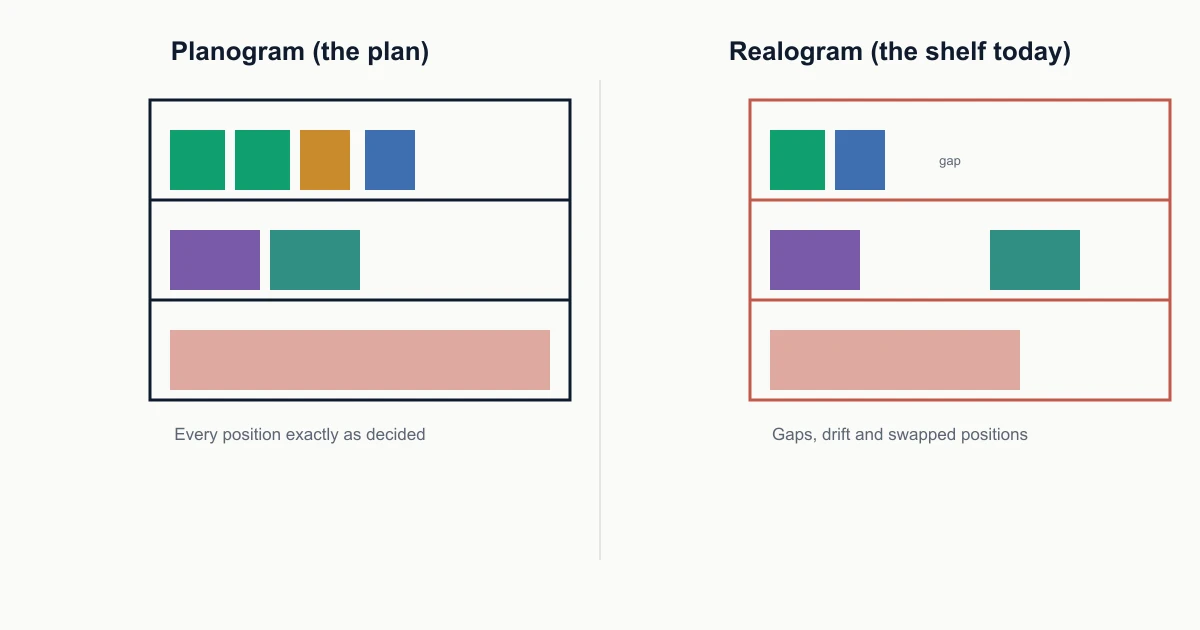
An end cap gets its own display planogram, separate from the aisle:
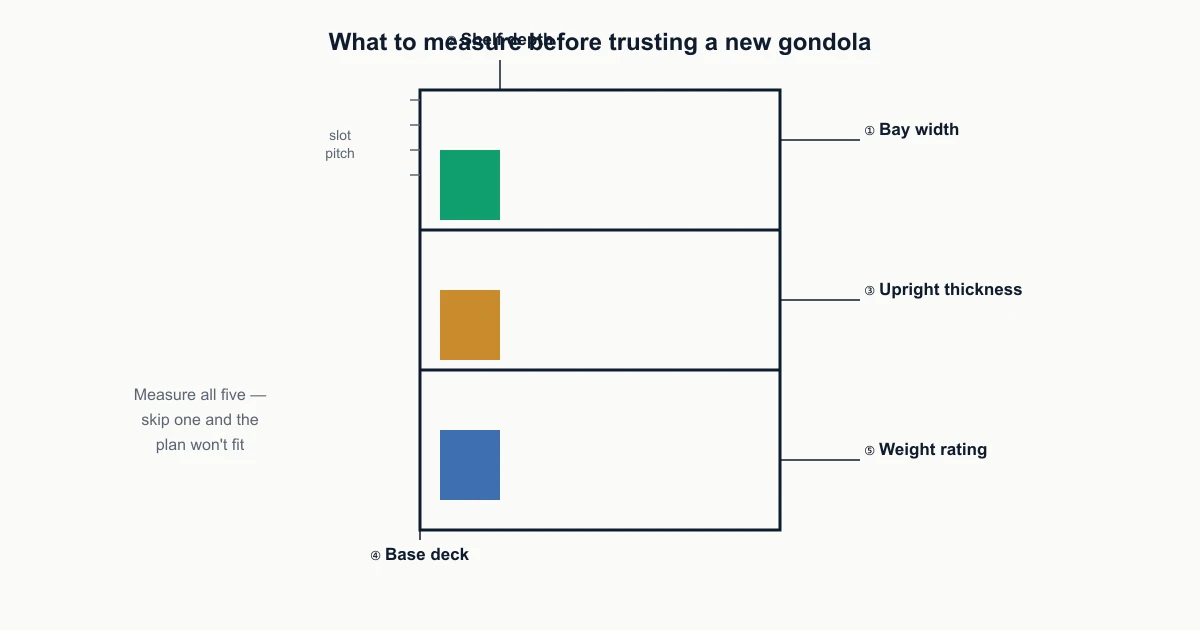
- fixture dimensions and number of shelves
- products, facings and stack heights
- signage size and position
- start and end dates, and what replaces it
Dates matter because end caps rotate. Without them, a promotion lingers long after the price has changed. The method is the same as for any shelf; see how to make a planogram.
Who pays for the end cap
In many chains, suppliers pay for end cap placement through trade promotion funds, sometimes as part of a wider promotional deal. Retailers also use end caps for their own private label, for clearing excess stock and for each planogram for seasonal products. The planogram team usually receives a promotional calendar listing which product holds which end cap and when.
Common end cap mistakes
- Too many products: looks cluttered, no single message.
- No price or the wrong price: shoppers assume it is expensive or skip it.
- Running out mid-promotion: an empty end cap is the most visible gap in the store; see reduce out of stocks for capacity planning.
- Out-of-date signage: a finished promotion still advertised confuses shoppers and staff.
Few products, deep stock, clear dates
So, what is an end cap in retail in practice? It is the store's most visible shelf, and it works best when it says one thing clearly, holds enough stock to last the promotion and is replaced on schedule. Plan it as carefully as the aisle behind it. Wikipedia's visual merchandising entry covers the wider principles behind these displays.
FAQ
Why are end caps important in retail?
They sit on the main shopper path, so far more people see them than see any single in-aisle shelf. That makes them ideal for promotions and launches.
What products go on end caps?
Promoted items, seasonal products, new launches and sometimes private label or clearance stock. Usually one hero product with one or two complementary items.
How often should end caps change?
Typically every few weeks, in line with the promotional calendar. Dates should be written on the end cap planogram.
Do suppliers pay for end caps?
Often, yes. Many retailers sell end cap space as part of promotional agreements funded by supplier trade spend.