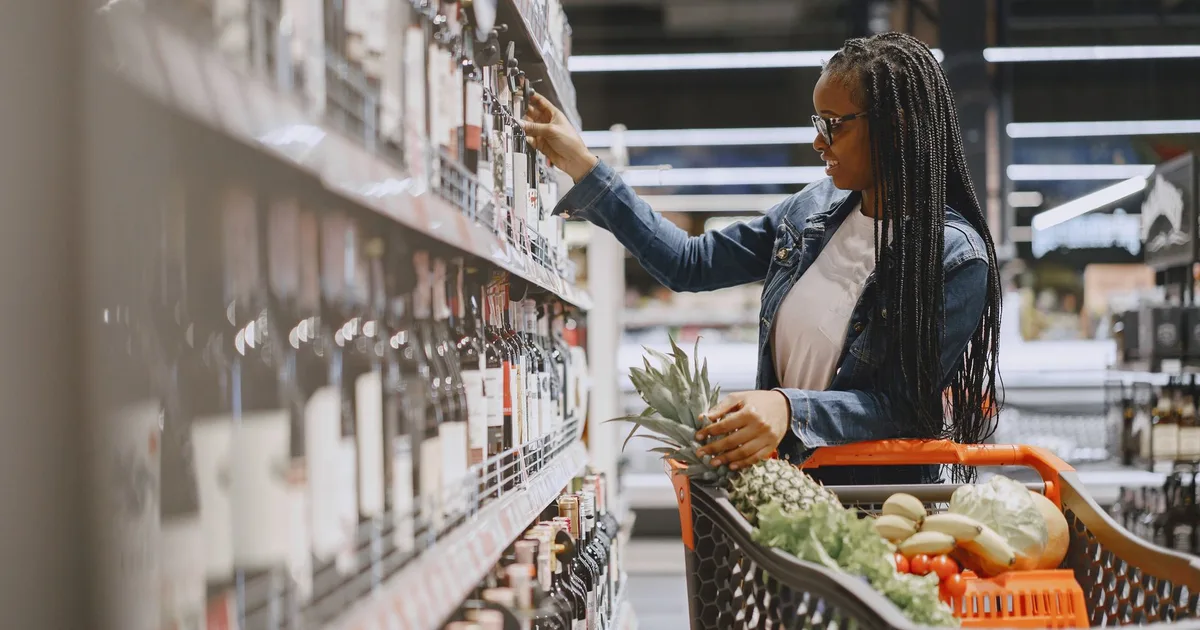
A wine and spirits shelf planogram carries regulatory weight that most grocery categories don't, alongside the practical challenges of fragile glass packaging and a shopper base that spans from someone who wants a specific, familiar bottle to someone who has no idea what they're looking for.
What makes this category distinct
Regulatory placement rules vary significantly by jurisdiction. Where and how alcohol can be displayed, sold, and merchandised is governed by local regulation that differs widely — from where it can be located in the store relative to other categories, to age-verification requirements at point of sale, to restrictions on promotional signage. A planogram for this category has to be built with these constraints as a starting point, not an afterthought.
Glass packaging means breakage risk shapes both placement and handling. Heavier bottles on upper shelves carry more risk if dropped, and a reset crew handling this category needs more careful protocols than a typical dry-grocery reset — this is both a safety and a shrink consideration.
The shopper base splits sharply between expertise levels. A shopper who knows exactly what they want needs an efficient, logically organized path to find it. A shopper without strong category knowledge benefits from clear signage, varietal or style groupings, and approachable navigation — a layout built only for the expert shopper underserves a meaningful portion of the category's traffic.
Price range within the category is unusually wide. Wine and spirits can span from everyday, low-price options to premium bottles at many multiples of that price, within the same physical fixture — sequencing and signage need to help a shopper navigate by price tier as much as by type or varietal.
Planning around these factors
- Confirm regulatory placement and display requirements for your specific jurisdiction before finalizing layout, since this isn't a constraint that general merchandising best practice alone can resolve.
- Build handling protocols for reset and restocking specifically around breakage risk, rather than applying standard dry-grocery handling expectations.
- Segment by type or varietal first, then by price tier within that segment, which tends to support both the expert shopper (who knows the varietal they want) and the less confident one (who can navigate by style before worrying about price).
- Use clear, approachable signage for less-expert shoppers, without assuming prior category knowledge the way a purely alphabetical or producer-based sequence would.
A closely related question is vape and tobacco shelf regulatory placement, which tends to come up around the same time. This connects to automotive aftermarket shelf merchandising — the two are usually worth planning together. Worth checking next: pharmacy shelf planogram, which covers a closely related part of the same decision.
FAQ
Does alcohol merchandising regulation vary a lot between regions?
Yes, substantially — placement rules, signage restrictions, and sometimes even which retail formats can sell alcohol at all differ meaningfully by jurisdiction, making this one of the categories where local regulatory research is essential before finalizing a plan.
Should wine be sequenced by country of origin, varietal, or price?
There's no universal answer — different approaches suit different shopper bases, though varietal or style-first sequencing with price as a secondary cue tends to serve a broad range of shopper expertise levels reasonably well.
How should breakage risk affect shelf height decisions for this category?
Heavier, more breakage-prone items are generally safer on lower or mid-level shelves, both to reduce drop risk and to ease handling during restocking, similar to the broader principle of placing heavy items low.


