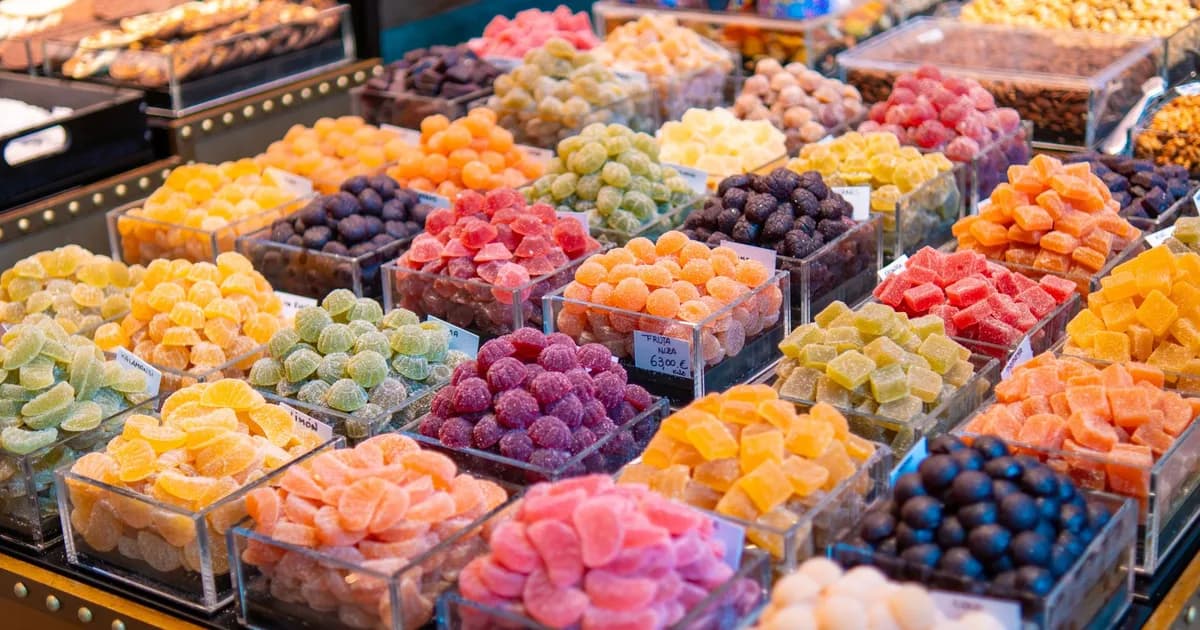
A checkout hanger with a handful of impulse bars is a completely different planning problem than a full candy aisle planogram for the main bay, where a store might carry chocolate bars, gummies, hard candy, bagged sharing formats and boxed gift candy all at once. The checkout strip sells on pure impulse; the main aisle has to serve a shopper who's actually browsing a wide range and comparing options.
Blocking by format, then by brand within format
Chocolate, gummy/chewy, hard candy and bagged sharing formats behave as distinct sub-categories with different shoppers and different purchase triggers, so blocking the aisle by format first — then brand within each format — tends to outperform a pure brand-blocked layout where every format from one brand sits together but different brands within the same format are scattered.
Bagged sharing candy needs its own depth and facing logic
Large bagged formats meant for sharing or home stock are a different physical footprint than single bars, and they sell on a different occasion (stocking up versus a quick treat). Giving them a clearly bounded lower-shelf block, separate from single-serve bars at eye level, keeps the two very different shopper intents from competing for the same prime shelf space.
Running a category this impulse-driven without losing structure
- New product trial needs a protected rotating block, since candy launches are frequent and a crowded, fully-committed planogram leaves no room to test anything new without displacing an existing performer.
- Seasonal candy (holiday-shaped or holiday-packaged items) belongs in a bounded seasonal zone, same as other spike categories, rather than permanently eating into year-round facings.
- Sugar-free and dietary-specific candy deserves a clearly labeled sub-block, since that shopper is searching by dietary need first and won't necessarily browse the full standard range to find it.
- Melting risk in warm store zones is a real planning constraint for chocolate specifically — a candy block positioned near a heat source (a sunny window, equipment venting warm air) will show visible quality problems faster than almost anything else in dry grocery.
This pairs naturally with vitamins and supplements aisle planogram, which tackles a closely related piece of the same problem. This overlaps with coffee and tea aisle planogram, which is worth checking if that's also part of your situation. A closely related question is spice rack planogram, which tends to come up around the same time.
FAQ
Should the main candy aisle duplicate what's at checkout?
A small amount of overlap on the very best sellers is normal and fine, but the main aisle should still carry the full range — checkout exists to catch last-minute impulse, not to replace the main browsing destination for the category.
How much space should seasonal candy get during a holiday?
Enough to feel like a genuine event rather than an afterthought — most stores see a meaningful spike around major candy-driven holidays, and under-facing the seasonal block leaves real sales on the table.
Does candy need temperature-controlled shelving?
Not typically full refrigeration, but placement that avoids direct heat exposure matters more for chocolate than for hard candy or gummies, which are more heat-tolerant.


