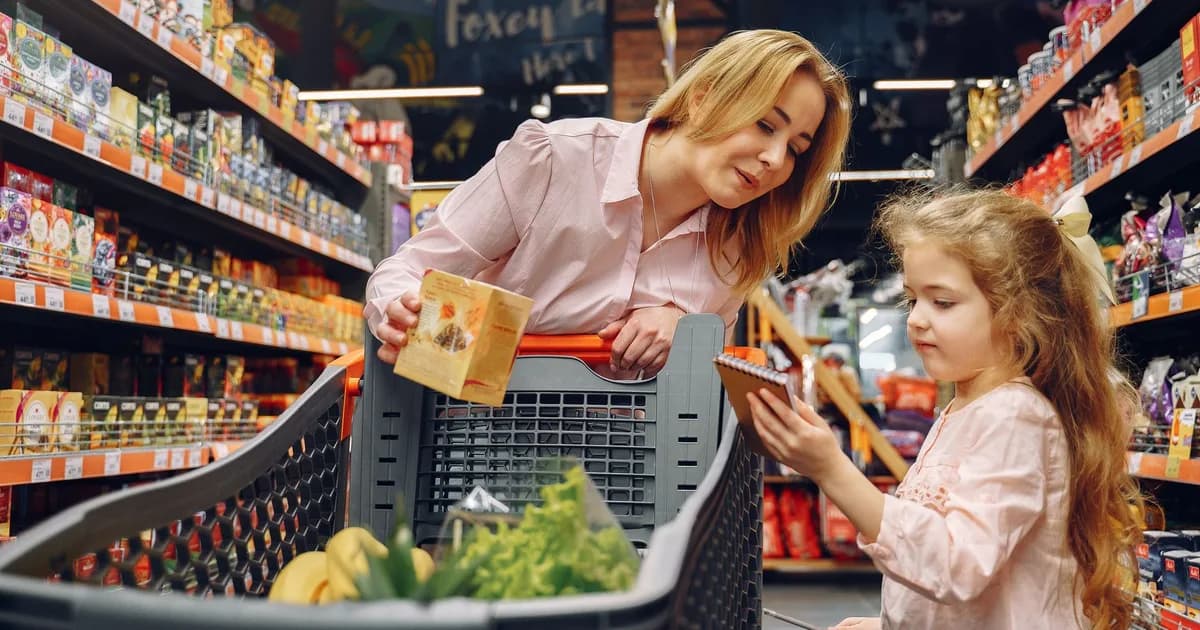
A cereal aisle planogram does more work than most category layouts because it's selling to two shoppers at once: the adult paying, and the child who can see a very specific band of the fixture. Get the height split wrong and you're not just losing facings — you're losing the exact shelf position that drives impulse adds for the category's highest-margin boxes.
The shelf band that actually matters in cereal
Kids' cereal sells on sightline, not just eye level for an adult. Boxes aimed at children belong roughly waist-to-shoulder height for a child shopper — which in practice sits lower than standard adult eye level on the fixture. Health and adult cereal can sit at true adult eye level, since that shopper is making a considered choice and will look for it. Bagged cereal, value multipacks and large family-size boxes go on the bottom shelves, where the weight and bulk make sense and where price-driven shoppers are already looking down to compare unit cost.
Blocking by brand versus blocking by occasion
Most cereal aisles default to brand blocking because manufacturers push for it and it's easy to maintain. The alternative — blocking by occasion (kids' sugary cereal, adult health/fiber, hot cereal, granola and muesli, bagged value) — tends to shorten the shopper's search time, especially for someone buying for a mixed household who's scanning for "the healthy one" or "the one my kid likes" rather than a specific brand name. A hybrid works for most stores: occasion blocks at the macro level, brand blocking within each occasion block.
Common cereal aisle problems worth planning around
- Box depth varies a lot within the category — family-size boxes are noticeably deeper than single-serve or value lines, so shelf depth needs checking per sub-block, not assumed uniform across the whole bay.
- Granola and muesli bags are a different footprint entirely — standing bags need either a shelf lip or a slightly recessed facing so they don't lean and block the row behind.
- Hot cereal (oatmeal, grits) often gets planned as an afterthought at the end of the aisle, even though it has a different seasonal curve than cold cereal and deserves its own clearly signed block rather than bleeding into the cold cereal run.
- New cereal launches need a landing spot before the next full reset — holding a few empty facings in the adult/health block for rotation gives new SKUs a fair trial window without forcing an early changeover.
If this is a recurring issue in your stores, coffee and tea aisle planogram covers a closely related angle worth checking. See candy aisle planogram for a related breakdown that often comes up alongside this. This pairs naturally with baking aisle planogram, which tackles a closely related piece of the same problem.
FAQ
Should kids' cereal always go on the second shelf from the bottom?
Not automatically — it depends on your typical shopper's child age range and the fixture's actual shelf heights. The principle is "within a child's natural sightline," which you confirm by checking the fixture, not by copying a rule of thumb from a different store format.
How much of the aisle should bagged cereal get?
Enough to reflect its actual share of category sales, not a token end. In stores where bagged and value formats sell well, under-facing them just pushes those sales to a competitor or to a different aisle entirely.
Does cereal need its own secondary display during back-to-school season?
It often earns one — breakfast habits shift noticeably around the start of the school year, and a secondary display frees up main-aisle space for the rest of the category without forcing a full reset.


