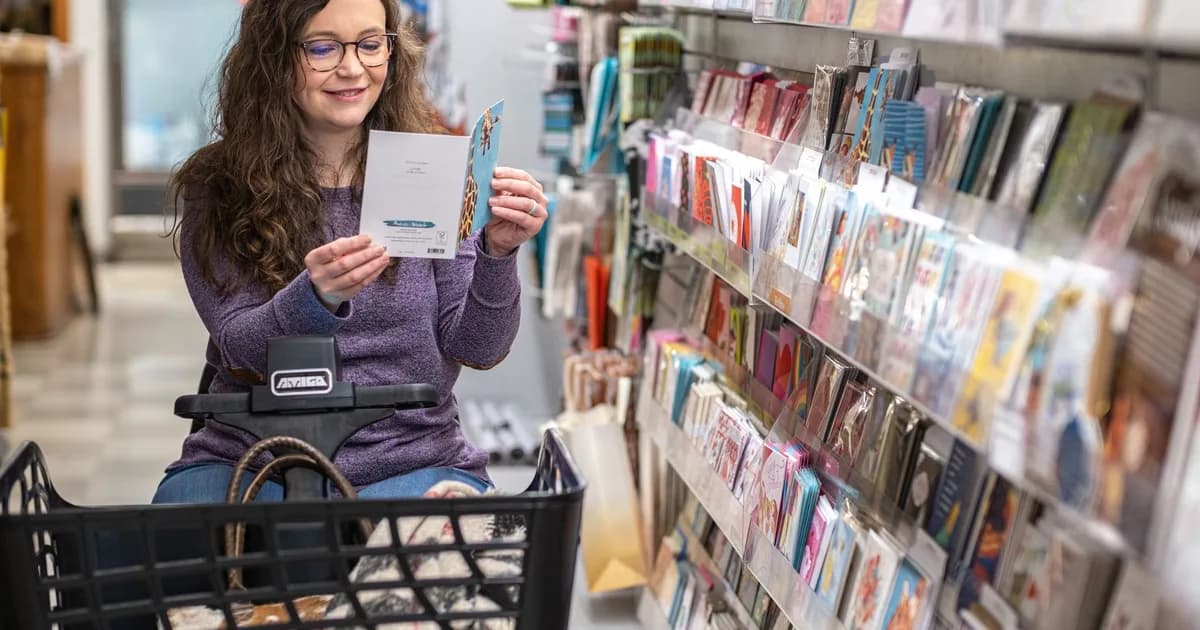
A greeting card and gift aisle layout works differently from almost every other section of a store, because the fixture itself — deep, narrow card pockets organized by category rather than brand — and the shopping behavior it supports — slow, occasion-driven browsing rather than quick restocking — don't match the standard shelf logic most of the planogram follows.
Why this category's layout logic is different
Shoppers arrive with an occasion in mind, not a brand or product name. A shopper isn't looking for a specific card by SKU; they're looking for "something for a 40th birthday" or "sympathy." The whole category sequence needs to be organized around occasion categories first, something most grocery categories don't do to nearly the same degree.
Browsing time is deliberately longer than almost any other category in the store. Unlike a quick-restock category, shoppers often expect — and the fixture is designed to support — spending real time comparing several options within the same occasion before deciding, which changes what "good" layout and spacing actually looks like here.
The fixture itself is a distinct planning unit. Card displays are usually deep, narrow-pocket units holding many SKUs face-out in a small footprint, a completely different physical planning problem than a standard shelf facing calculation.
Seasonal rotation is more frequent and more significant than in most categories. Beyond general seasonal changeover principles, card and gift sections often rotate meaningfully around specific calendar occasions throughout the year, each requiring its own dedicated space allocation and teardown discipline.
Planning this category well
- Organize primarily by occasion, with brand and style as secondary sorting within each occasion, matching how shoppers actually approach the decision.
- Plan seasonal occasion space on its own calendar, separate from the broader category's general space allocation, since major occasions can require significant temporary footprint that needs to be returned afterward.
- Account for the deep-pocket fixture's own replenishment logic, which differs from standard shelf facings — a pocket running low doesn't look the same as an empty shelf facing, and restocking cadence needs its own approach.
- Give slower-moving, less mainstream occasions a smaller but still-present footprint, rather than crowding them out entirely in favor of only the highest-volume occasions — card shoppers often specifically need a less common occasion covered, and its absence is more noticeable here than a missing SKU in most other categories.
A closely related question is frozen aisle around meal occasions, which tends to come up around the same time. This connects to ethnic and international foods section — the two are usually worth planning together. Worth checking next: wine and spirits shelf planogram, which covers a closely related part of the same decision.
FAQ
How is a card fixture's "facing" really measured?
It's typically measured by pocket or slot rather than a traditional facing width calculation — the planning unit is closer to "how many card titles get a dedicated slot" than a standard units-wide shelf facing.
Should major occasions (holidays) get dedicated temporary space beyond the regular card fixture?
Often yes — many retailers add temporary seasonal card and gift displays specifically for major occasions, separate from the year-round fixture, given how much the demand spikes around those specific dates.
Does this category see much private label or generic competition?
Generally less than most grocery categories — card and gift purchasing tends to be more about the specific design, message, or brand than price-driven substitution, which limits how much private label typically displaces established card brands.


