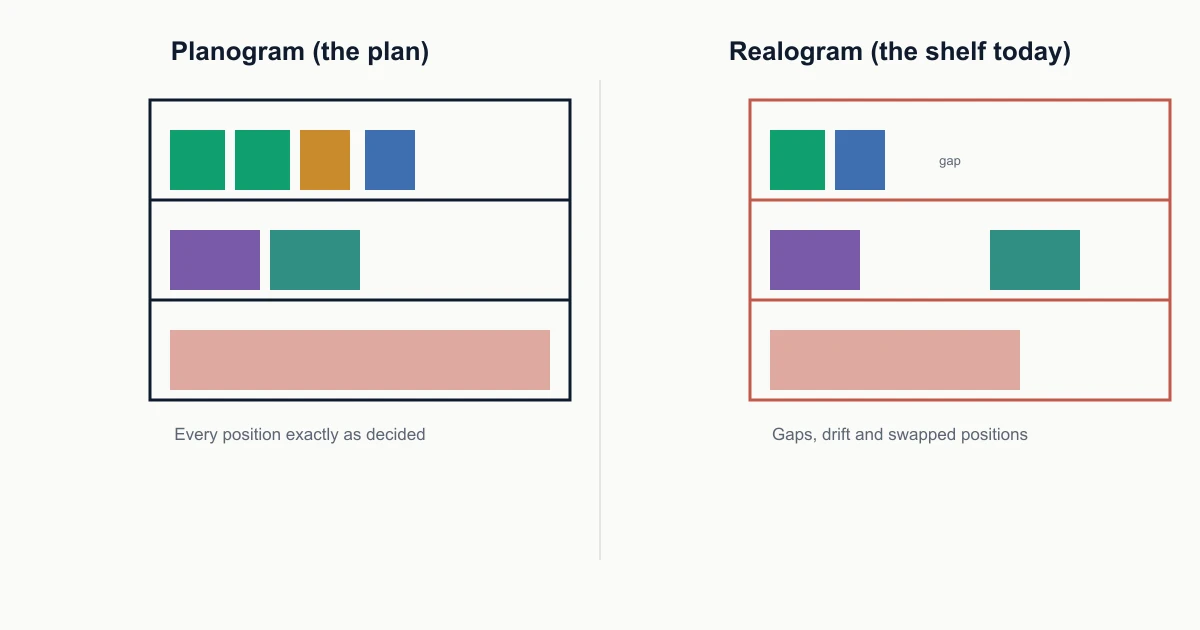
A new store opening is the one time a planogram is supposed to be followed exactly — there's no existing stock to work around, no prior layout to unlearn. And yet it's one of the most common places a planogram and the real shelf disagree from day one. The plan assumed a finished fixture and a complete first fill; what actually shows up on opening morning is rarely either.
Where the mismatch actually comes from
The first fill order doesn't land complete. Suppliers allocate limited initial stock across every store opening that week, and a new account doesn't always get full case quantities on every SKU. The planogram was built assuming full facings; week one often isn't full facings.
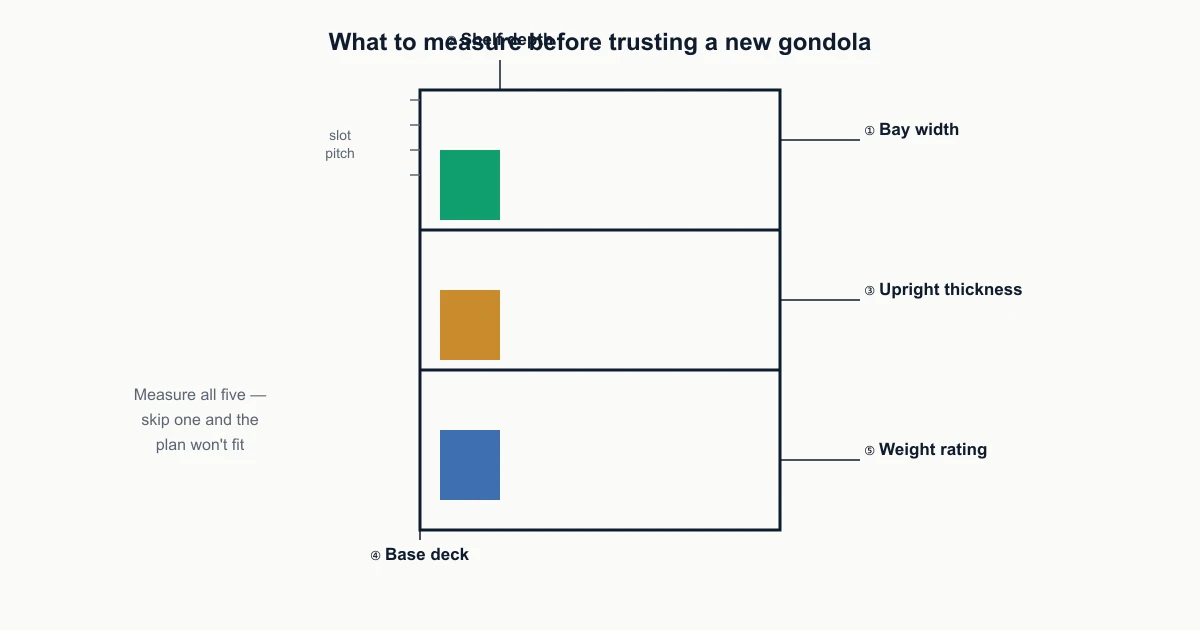
The fixture isn't exactly what was specified. Installed shelving can differ by a few centimeters from the spec sheet, shelf pins land in slightly different holes, and end caps or secondary fixtures sometimes arrive late or get substituted. A plan built to exact dimensions meets a fixture built to "close enough."
The reset crew is working against the clock, not the plan. Store-opening timelines are usually driven by a fixed launch date, not by how long a perfect reset takes. When time runs short, crews fill shelves to look complete rather than matching the plan position by position.
Local range hasn't been finalized yet. New stores sometimes open before every regional or local SKU has cleared distribution, so the planogram includes items that simply aren't available on day one.
Why this is worse than drift in an established store
In an established store, a planogram mismatch is a deviation from something the shopper already knows. In a new store, the first layout a shopper sees becomes their mental map of the store — if that first layout is wrong, you're not correcting drift, you're teaching shoppers the wrong store from the start.
Closing the gap before doors open
- Separate "what's specified" from "what's confirmed in stock." Build the planogram from full distribution assumptions, but walk the actual opening order against it before week one, and know exactly where the gaps will be.
- Walk the physical fixture against the spec before the reset starts, not after it's fully stocked — a shelf-height mismatch caught early is a five-minute fix; caught after full stock, it's a rebuild.
- Plan a deliberate "settle" reset at 30–60 days, not just the opening reset. By then, full distribution has usually caught up and the fixture issues have surfaced — this is the point to actually match the plan exactly, not opening week.
- Give the opening crew a priority order, not just a finished-state diagram — which SKUs and sections matter most if time runs out, so the compromises land in the lowest-impact places.
This overlaps with how to plan a new store planogram, which is worth checking if that's also part of your situation. A closely related question is planogram compliance execution problem, which tends to come up around the same time. This connects to one standard planogram — the two are usually worth planning together.
FAQ
How long does it typically take a new store to reach full planogram compliance?
Most chains treat the first 4–8 weeks as a settling-in period, with a deliberate follow-up reset once full distribution has arrived, rather than expecting day-one compliance.
Should a new store's planogram be different from an established store's?
The category logic and sequencing should stay the same so the layout feels familiar to shoppers who know the brand. Facings may need temporary adjustment in week one to reflect whatever stock actually arrived.
Who should walk the fixture before the first reset — the store team or head office?
Ideally both: the store team knows the physical reality of what was installed, and head office (or whoever built the plan) can quickly confirm whether a deviation needs a plan change or just a one-time workaround.