A single standard planogram, rolled out to every store in a chain, treats a 16-foot gondola the same as a 4-foot one, and a commuter store the same as a weekend destination store. It's the fastest way to plan a category — and it's also the most common reason compliance quietly collapses the moment the plan leaves head office.
Why "standard" breaks on contact with real stores
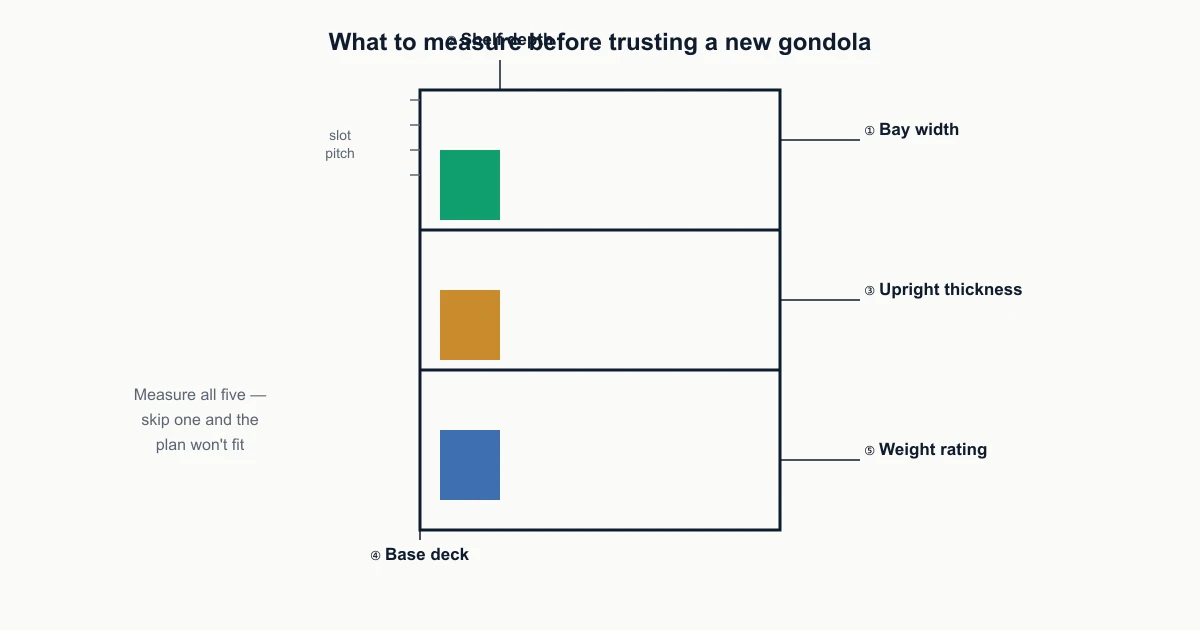
A planogram built in a planning tool assumes a fixture of a specific width, a specific number of shelves, and a specific set of SKUs available to fill it. Real stores rarely match all three:
- Fixture size varies. Even within the same banner, store footprints differ by format, age, and local real estate constraints. A plan built for the average store doesn't fit the stores on either side of that average.
- Demand varies by location. A store near a school sells more single-serve snacks; a store near a highway sells more grab-and-go. A standard plan gives both the same facings regardless.
- Local range varies. Some products are only distributed regionally, or a store carries a local brand the standard plan never accounted for.
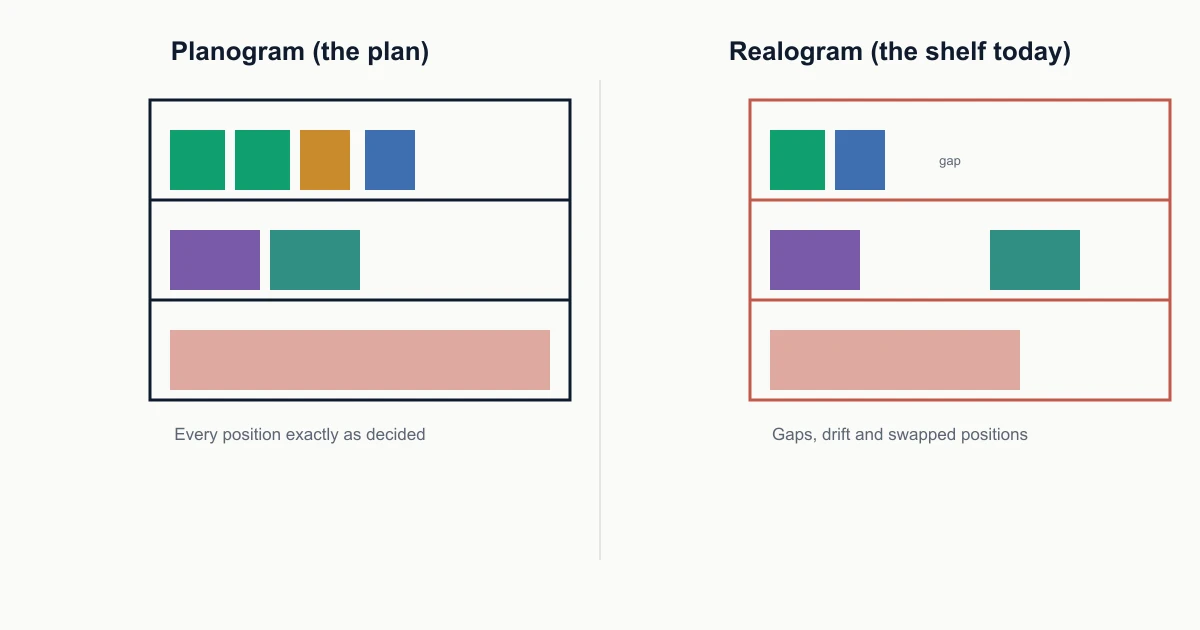
When the physical fixture or the available SKUs don't match the plan, store teams are left to improvise — and improvisation is where compliance drift starts.
The usual workaround, and why it backfires
Most chains respond to this by giving the store manager "discretion" to adapt the standard plan locally. In practice, this means every store ends up with a slightly different, undocumented version of the plan, built under time pressure with whatever products happen to be in the back room that day. Six months later, nobody — not the category manager, not the next manager at that store — knows what the layout is actually supposed to be.
A better middle ground: variants, not one-offs
The fix isn't to hand-build a unique planogram for every store — that doesn't scale either. It's to build a small number of planogram variants tied to store clusters:
- Cluster by fixture size first. A 4-foot, 8-foot, and 16-foot version of the same category logic covers most of the physical variation.
- Then adjust facings by sales mix within each cluster, not by individual store guesswork.
- Keep the category logic — the order, the blocking, the adjacency — identical across variants. Only the facing counts and SKU count should change; the shopping logic shouldn't.
- Name and track variants explicitly, so a store manager knows which version applies to their fixture, not just "the standard one, adjusted."
This turns "every store improvises" into "every store follows one of three or four known, approved versions" — which is something you can actually audit.
Worth checking next: how to cluster stores for planograms, which covers a closely related part of the same decision. This is closely tied to new store opening, and the two often need to be solved at the same time. If this is a recurring issue in your stores, planogram compliance execution problem covers a closely related angle worth checking.
FAQ
How many planogram variants does a chain actually need?
Most categories need far fewer than people assume — often three to five fixture-size variants cover 80–90% of the physical variation in a chain. Building more than that usually adds management overhead without much extra sales benefit.
Is it better to build store-specific planograms for high-volume stores?
For your top-volume flagship stores, a dedicated variant can be worth the extra planning time, since the sales at stake are larger. For the long tail of average-volume stores, a shared cluster variant is almost always the better trade-off.
How do you know your standard planogram is failing in the field?
Falling compliance scores concentrated in a specific store size or format — rather than spread evenly across the chain — is the clearest signal that the "standard" plan doesn't fit that group of stores.