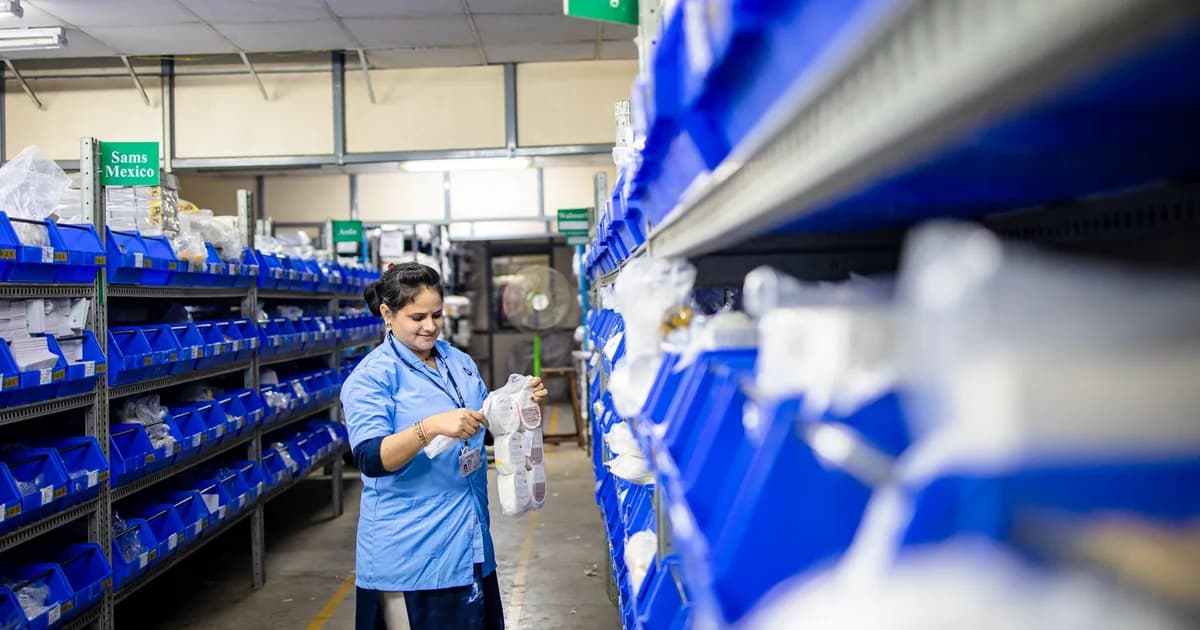
Picking for online orders disrupts the customer-facing shelf in ways that often get treated as a separate operational concern, even though it's happening on the exact same shelf the planogram is trying to keep compliant for in-store shoppers. A store built for in-aisle shopping, not for order fulfillment, feels that mismatch directly.
What picking actually does to the shelf
Facings get pulled unevenly compared to normal shopper behavior. A shopper buying one or two units leaves the facing visually intact. A picker fulfilling several online orders in a short window can empty a facing's visible stock quickly, creating a gap that looks like understock even if the backroom has plenty of inventory.
Pickers move through the store on a different path than shoppers. Optimized for picking efficiency, that path can create temporary congestion or disruption in sections shoppers are actively browsing, especially during peak online-order volume that doesn't necessarily align with peak foot-traffic hours.
Picking can outpace restocking for high-online-demand items. A product that's popular for online orders but not restocked on a matching cadence can run thin specifically from picking activity, even while its in-store sales velocity alone wouldn't justify a stockout concern.
A picker working against a time target may not prioritize shelf tidiness the way a merchandiser would. Facing products neatly after removing stock isn't always built into picking workflows optimized purely for speed, which can leave a shelf looking less compliant even when the actual stock level is fine.
Why this creates a specific tension
Store fulfillment and in-store merchandising are often measured against different goals — picking speed and accuracy versus shelf compliance and shopper experience — even though both activities draw from the exact same physical inventory on the same shelf. Without deliberate coordination, optimizing one can come at the direct expense of the other.
Managing the tension
- Schedule high-volume picking windows around, not during, peak shopper traffic where operationally possible, reducing the visible disruption to in-store shoppers.
- Build a facing-tidiness step into picking workflows, not just speed and accuracy metrics, so fulfillment doesn't quietly erode shelf presentation.
- Monitor restocking cadence against combined in-store and online demand, not in-store sales velocity alone, for categories with meaningful online order volume.
- Treat a stockout caused primarily by picking activity differently from one caused by weak distribution — the fix (restocking frequency, buffer stock) is different even though the symptom looks the same.
This connects to training staff for BOPIS handoffs — the two are usually worth planning together. Worth checking next: store inventory accuracy, which covers a closely related part of the same decision. This is closely tied to returns and restocking, and the two often need to be solved at the same time.
FAQ
Should online order picking happen from the same shelf stock as in-store shoppers?
In most ship-from-store and BOPIS models, yes — this is exactly what creates the tension, since a separate, dedicated online-only stock pool isn't practical for most retailers at typical store scale.
Does picking disruption affect every category equally?
No — high-online-demand categories see more disruption than categories with little online order activity, since the picking volume relative to normal shopper-driven facing depletion varies significantly by category.
Can picking schedules realistically avoid all overlap with peak shopping hours?
Not entirely — some overlap is usually unavoidable given order fulfillment time expectations, but minimizing it during the highest-traffic windows reduces the most visible disruption to in-store shoppers.


