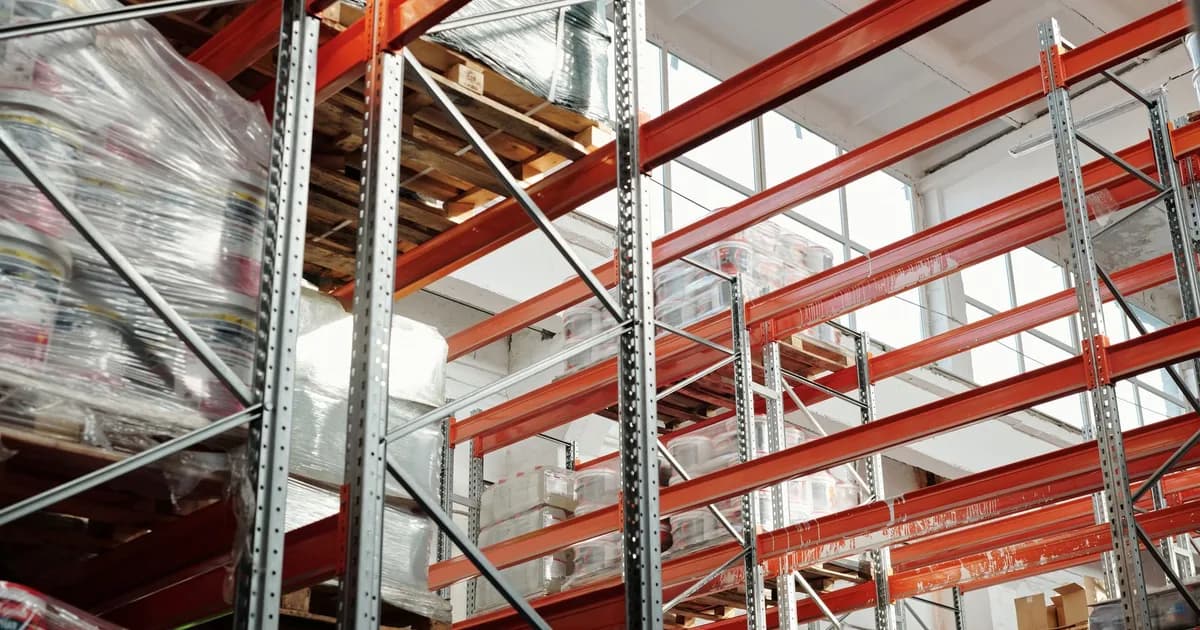
Store inventory accuracy consistently runs well below what distribution centers achieve, and the gap isn't a management failure specific to any one chain — it's structural, built into how differently a store floor and a warehouse actually operate.
Why store and warehouse accuracy diverge
A warehouse is a controlled, single-purpose environment. Pallets move through defined zones, scanned at defined checkpoints, with relatively few hands touching any given unit before it ships. A store floor is the opposite — constant shopper handling, staff restocking from multiple sources, and products that can be moved, misplaced, or damaged by anyone passing through the aisle.
Shoppers themselves introduce untracked movement. A shopper picking up an item, changing their mind, and setting it down in a different aisle is a routine, invisible event that no inventory system captures in real time — multiplied across every customer in every store, this is a meaningful, continuous source of inventory drift that warehouses simply don't experience.
Store-level counting happens far less frequently than system-of-record assumptions suggest. A warehouse typically has tighter, more frequent cycle counting built into its operations. A store relies more heavily on point-of-sale data inferring what should be on the shelf, with physical counts happening on a much longer cycle.
Theft and shrink concentrate at the store level, not the warehouse. Shrink from external theft, internal theft, and administrative error overwhelmingly happens on the sales floor, further eroding the gap between what the system says is there and what physically is.
Why this gap matters more now than it used to
As long as inventory accuracy only affected whether a shopper found what they wanted on a visit, the cost of this gap was mostly about lost sales from a stockout. With the growth of omnichannel fulfillment — a shopper ordering online based on system-reported inventory, expecting to pick it up or have it shipped from that exact store — inaccurate store inventory now directly creates a broken promise to a customer who already expected the purchase to be fulfilled.
Reducing the gap
- Increase store-level cycle counting frequency for high-value or fast-moving categories, rather than relying on infrequent full counts.
- Use available technology (RFID, image recognition) to supplement manual counting where the investment is justified by category value or shrink risk.
- Build buffer logic into omnichannel systems that accounts for known inventory accuracy limitations, rather than promising fulfillment based on a system count with no margin for the real-world gap.
- Treat planogram compliance and inventory accuracy as related but distinct problems — a correctly stocked shelf position and an accurate system count aren't automatically the same thing.
Worth checking next: eye level is buy level, which covers a closely related part of the same decision. This is closely tied to picking for online orders disrupts the shelf, and the two often need to be solved at the same time. If this is a recurring issue in your stores, shelf lighting that distorts product appearance covers a closely related angle worth checking.
FAQ
How big is the typical gap between warehouse and store inventory accuracy?
Industry commentary has cited warehouse accuracy routinely above 99%, compared to meaningfully lower figures at the store level — exact numbers vary by source and methodology, so treat any specific percentage as directional rather than a guaranteed benchmark for your own operation.
Does this gap affect all categories equally?
No — high-theft, high-handling, or fast-moving categories tend to show larger gaps than slower-moving, lower-shrink categories, since both shopper handling and theft concentrate unevenly across a store's assortment.
Can technology fully close the gap between store and warehouse accuracy?
It can narrow it meaningfully in categories where the investment is justified, but the store environment's inherent differences from a warehouse — constant shopper handling chief among them — make a full close of the gap unlikely regardless of the technology deployed.


