What is a planogram? It is a to-scale diagram that tells a store exactly where each product goes on a fixture: which shelf, in what order, and with how many facings (units visible side by side). Retailers and suppliers use it so every store builds the shelf the same way and the best-selling products get the space they earn.
You will also hear it called a POG, a shelf plan, a schematic or simply a "plan". The idea is the same: decide the shelf on paper or screen before anyone stocks it.
What is a planogram on a real shelf?
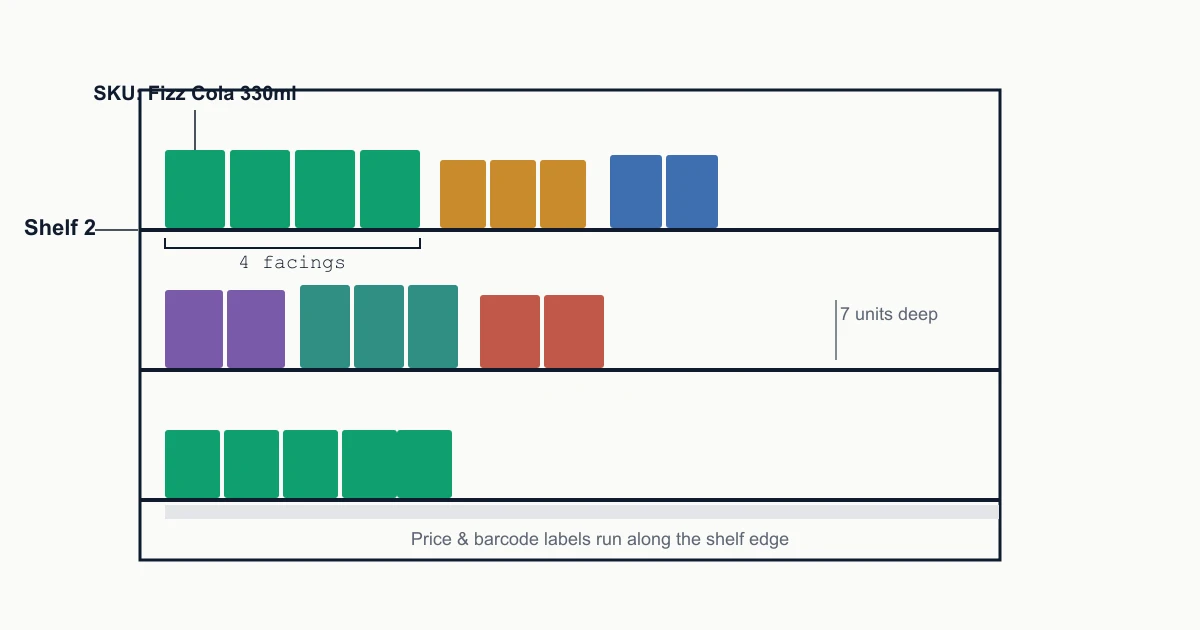
A planogram turns a merchandising decision into something a store team can follow. Instead of "put the colas near the water", it says: shelf 3, positions 1–4, Fizz Cola 330 ml can, 6 facings, 7 deep.
That precision is the point. A shelf built from memory changes every time a different person restocks it. A shelf built from a planogram looks and sells the same in every store, which is also why Wikipedia describes planograms as a core tool of visual merchandising.
What you will find on a typical planogram
Most planograms, whether drawn by hand or exported from software, carry the same information:
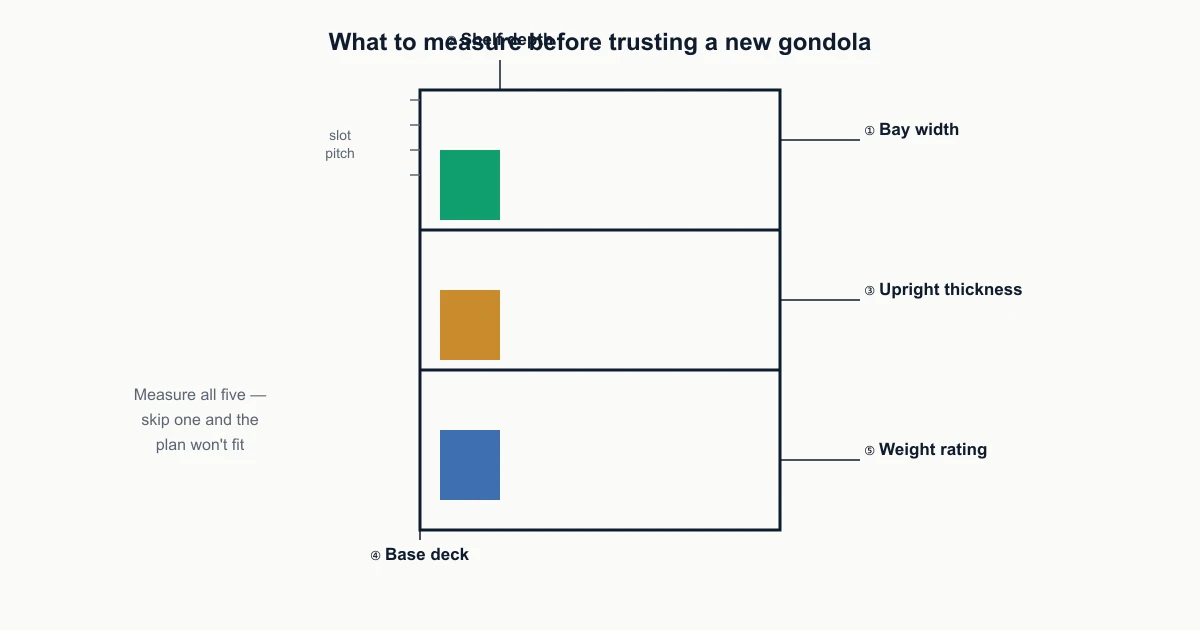
- The fixture: shelf, gondola bay, chiller door or peg wall, with its width, depth and shelf heights.
- Product positions: each product drawn to scale in its exact place, usually with an image or name.
- Identifiers: SKU, barcode (UPC/EAN) and pack size, so staff do not confuse similar packs.
- Facings and depth: how many units across and how many behind.
- Notes: price-label position, promotions, "do not stack" or rotation instructions.
- Version and date: so the store knows which plan is current.
Shelf, chiller and hanger planograms look different, but they answer the same question: what goes where, and how much of it.
Planogram vs realogram
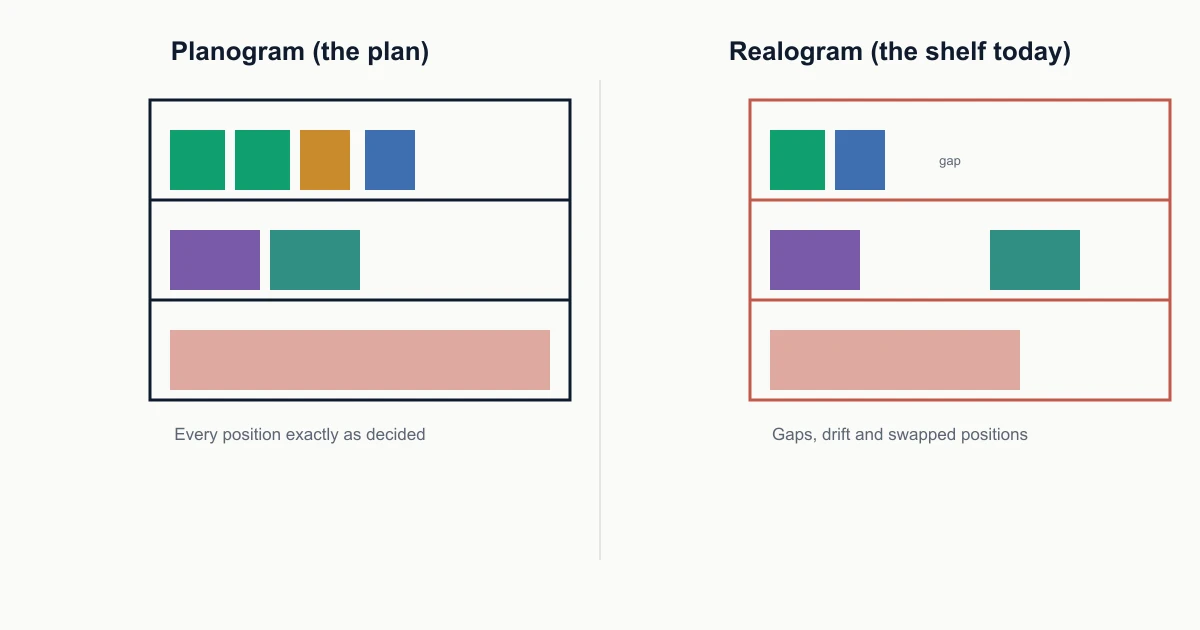
The planogram is the plan. The realogram is what the shelf actually looks like today, often captured as a photo. Comparing the two is how teams measure planogram compliance: positions that match the plan, divided by all positions on the fixture.
Why retailers and brands bother
A planogram does four jobs at once:
- Space follows sales. Fast sellers get more facings, so they run out less often.
- Shoppers find things faster. Products are grouped in the order people choose them, for example by type, then brand, then size.
- Stores stay consistent. A chain can roll out the same layout to hundreds of stores.
- Restocking is quicker. Staff know where each product belongs without guessing.
For suppliers, the planogram is also a negotiation document. In many categories the leading brand, the category captain, proposes the plan and the retailer approves it.
Who makes and uses planograms
- Category managers and space planners at retailers decide the layout.
- Trade marketing and category teams at manufacturers propose layouts for their brands and branded fixtures such as coolers.
- Merchandising agencies build and audit planograms for several brands.
- Store staff and merchandisers set the shelf from the plan and keep it that way.
Small stores use them too, and the benefits of planograms for small retailers are mostly practical. A shop owner with one drinks cooler can still benefit from deciding the layout once and sticking to it.
A planogram is a decision, not a drawing
So, what is a planogram in practice? It is a record of decisions about space, written precisely enough that anyone can rebuild the shelf. The drawing is just the format. If you want to make one, start with our guide on how to make a planogram.
FAQ
What does POG stand for in retail?
POG is short for planogram. Retail teams use it in file names, emails and store instructions, for example "new POG for aisle 4".
How is a planogram different from a store layout?
No. A store layout plans the whole floor: aisles, departments and fixtures. A planogram plans the products on one fixture or section within that layout.
Do small shops need planograms?
They do not need complex ones, but even a simple sketch of each fixture helps a small shop keep best sellers visible and spot gaps quickly.
How often do planograms change?
Most categories are reviewed once or twice a year, with smaller updates when products launch or are delisted. Seasonal displays change more often.