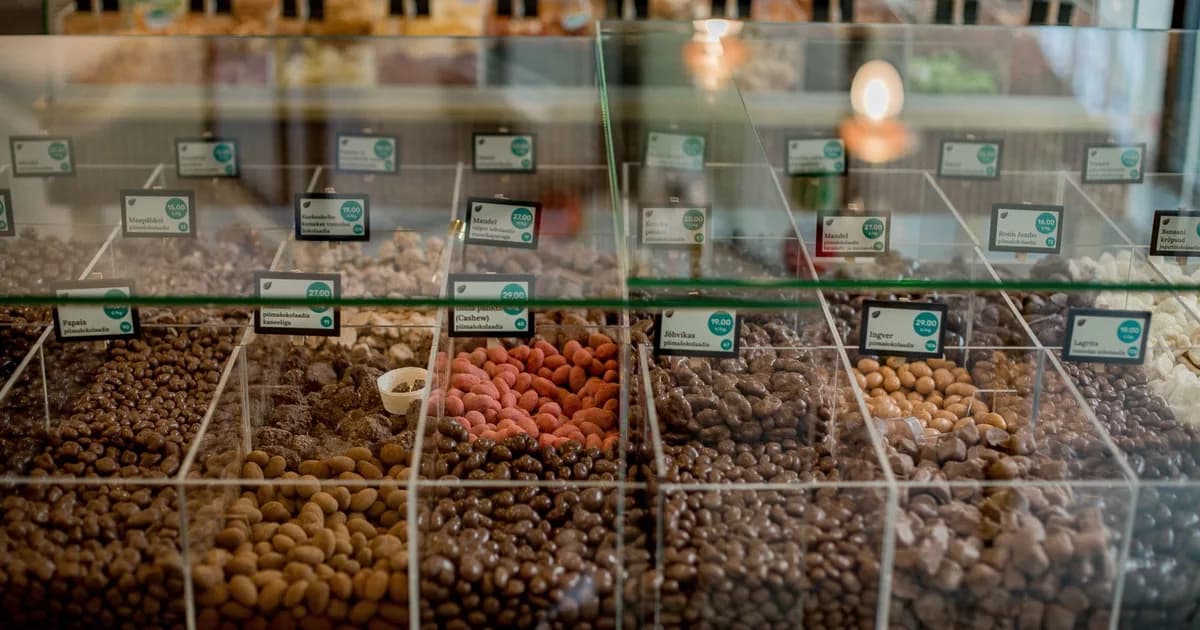
Bulk bin merchandising — gravity bins, scoop bins, or dispenser units for grains, candy, nuts, or spices sold by weight — doesn't fit neatly into standard shelf-facing logic, because there's no fixed "facing" the way a packaged product has one. The planning unit is bin capacity and turnover, not units-wide and units-deep.
What's actually different about planning a bulk bin layout
The planning unit is volume and refill frequency, not facings. Instead of deciding how many units fit across a shelf, bulk merchandising decides how large a bin a given SKU needs based on how fast it sells and how often someone is available to refill it — a slow-moving bulk item in an oversized bin looks emptier and staler for longer; a fast-moving item in an undersized bin runs out between refills.
Sequencing still matters, but by a different logic. Shoppers browsing bulk bins commonly move through them by type — grains together, dried fruit together, candy together — similar to packaged-goods sequencing, but without brand or size variation to organize within each group, since bulk items are usually sold under one house format regardless of source supplier.
Signage and labeling carry more weight than in packaged goods. With no package to display branding, ingredients, or pricing, the bin's signage is the only source of that information for the shopper — a bulk layout lives or dies on whether labels stay correctly matched to the bin they describe, especially after a refill or reorganization.
Cross-contamination and allergen separation are a planning constraint, not just a nice-to-have. Bins containing allergens need deliberate physical separation from bins that don't, independent of where pure sales logic would otherwise place them — this is a safety requirement that overrides normal sequencing when the two conflict.
Common execution problems
- A label getting mismatched to its bin after a refill, especially when multiple bins are refilled in the same session and labels aren't double-checked against the correct product afterward.
- Bin sizing that doesn't match real turnover, leading to either frequent, disruptive refills or a bin that looks stale and half-empty for long stretches.
- Allergen-containing and allergen-free bins placed close enough together that scoops or spillage create a real cross-contamination risk.
This is closely tied to two categories sharing one fixture, and the two often need to be solved at the same time. If this is a recurring issue in your stores, pharmacy shelf planogram covers a closely related angle worth checking. See club store planograms for a related breakdown that often comes up alongside this.
FAQ
How is "facings" even measured for a bulk bin section?
It typically isn't measured the same way — bin count and bin capacity per SKU are the more relevant planning metrics, with refill frequency factored in as the practical constraint equivalent to a delivery cycle in packaged goods.
Should bulk bins be sequenced the same way as the equivalent packaged version of the same category?
Loosely, yes — keeping a similar type-based sequence helps shoppers familiar with the packaged aisle navigate the bulk section intuitively, even though brand and size sorting doesn't apply the same way.
What's the biggest safety consideration unique to bulk bin layout?
Allergen separation — because bulk bins involve shared scoops and open product, physical distance and clear signage between allergen and non-allergen bins matters more than in sealed packaged goods.


