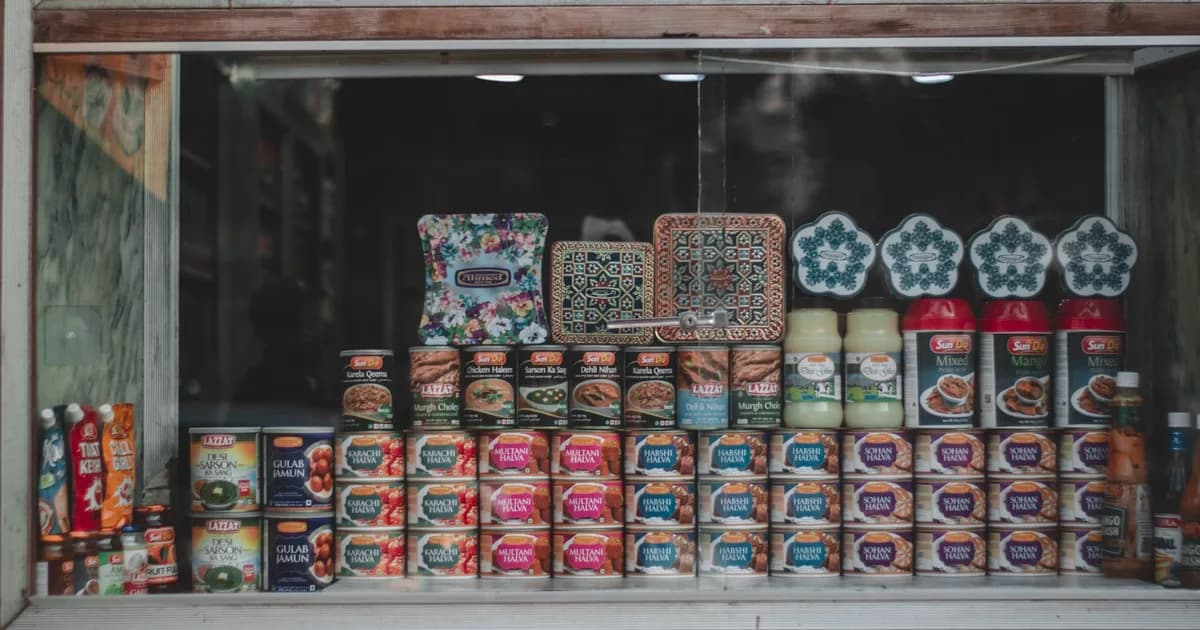
Bundling and cross-pack secondary displays pair complementary products together in a dedicated, usually temporary display — separate from each product's primary shelf position — to prompt a combined purchase a shopper might not have planned on their own. Done well, it's a genuine sales lift; done carelessly, it's clutter that competes with the main planogram without adding much.
What makes a cross-pack display actually work
The pairing has to reflect a real, obvious complementary relationship. The strongest bundles pair items a shopper would naturally use together — not just two products that happen to share a promotional calendar slot. A pairing that requires explanation to make sense rarely performs as well as one a shopper immediately understands.
The display needs its own clear visual identity, separate from either product's normal shelf context. A cross-pack display works best when it's visually distinct enough that a shopper recognizes it as a deliberate, curated pairing — not just two products randomly adjacent to each other.
Pricing or value messaging should be unambiguous. Whether the bundle offers an actual price benefit or simply convenience, the value proposition needs to be clear at a glance — an unclear bundle forces the shopper into exactly the kind of comparison effort that undermines quick, impulse-adjacent decisions.
Placement matters as much as the pairing itself. A well-conceived bundle in a low-traffic or poorly visible location underperforms a weaker pairing placed somewhere shoppers naturally pass and pause.
Common mistakes
- Pairing products with only a superficial or forced connection, which shoppers don't intuitively understand without reading an explanation.
- Treating the secondary display as permanent rather than tracking its performance and refreshing it, letting a pairing that's stopped working linger well past its useful life.
- Competing with the main planogram instead of complementing it — a cross-pack display that simply duplicates what's already easy to find on the primary shelf adds clutter without adding genuine incremental value.
- Skipping a clear teardown plan, leaving the bundle display up past its intended run the same way other promotional displays can linger without a scheduled end date.
Planning a bundle display
- Start from genuine, obvious use-case pairings, validated against actual basket data where available, rather than assuming a pairing makes sense.
- Give the display a distinct, deliberate visual identity, separate from either product's normal shelf presentation.
- Place it somewhere shoppers naturally encounter it with a moment to pause, not just wherever floor space happens to be available.
- Track performance and set a clear review or end date, treating it with the same discipline as any other promotional display.
This connects to pallet display footprint — the two are usually worth planning together. Worth checking next: wine and spirits shelf planogram, which covers a closely related part of the same decision. This is closely tied to LED shelf lighting conversion, and the two often need to be solved at the same time.
FAQ
How do you validate that two products are a genuinely good pairing for a bundle?
Basket analysis — looking at how often the two items are already purchased together in the same transaction — is a more reliable signal than assuming a pairing makes sense based on general category logic alone.
Should a cross-pack display always offer a discount?
Not necessarily — convenience (having both items in one place) can be enough of a value proposition on its own, though a genuine price incentive tends to strengthen the case for a shopper who's on the fence.
How often should bundle displays be refreshed or rotated?
This depends on the category and how quickly a specific pairing's novelty wears off, but periodically reviewing performance and refreshing underperforming bundles prevents a stale, ineffective display from quietly occupying space long after it's stopped adding value.


