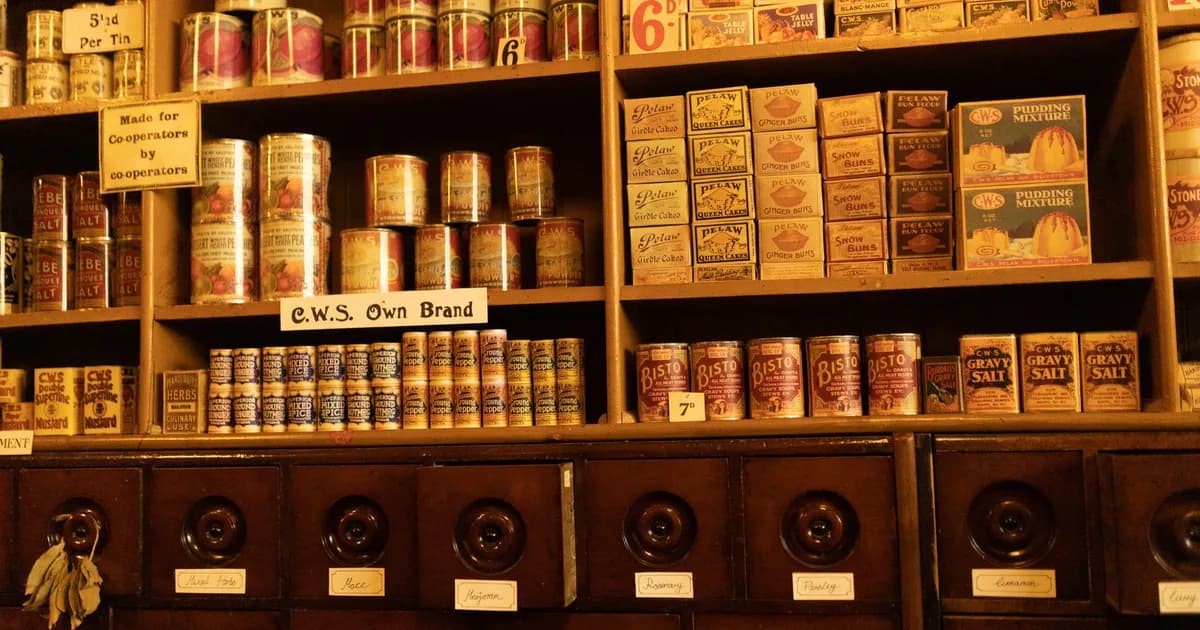
Cans are visually uniform in a way almost no other category is — same cylindrical shape, similar label size, often similar colors within a sub-category. That sameness is exactly what makes a canned goods and soup aisle layout hard to get right: without a clear grouping logic, every section looks like noise, and shoppers fall back on reading every single label instead of scanning for the block they want.
Group by use, not just by ingredient
Soup is usually its own clearly signed block, split further into condensed, ready-to-eat and broth/stock, because those are genuinely different purchase occasions. Canned vegetables, canned beans, canned tomatoes and canned fruit are the other major blocks, and within each, grouping by variety (diced vs whole tomatoes, black beans vs kidney beans) matters more than grouping by brand. A shopper cooking a specific recipe is scanning for "diced tomatoes," not for a brand name first.
Facing depth and the two-deep problem
Standard cans are short enough that most shelves can hold two or three deep without blocking the label on the can behind. The real planning problem is larger cans — family-size soup, large tomato cans, catering-size vegetables — which need either a dedicated lower shelf with more depth or a reduced facing count up front so the label on the second can isn't fully hidden behind the first.
What actually slows shoppers down in this aisle
- Label color similarity within a brand's own range makes adjacent SKUs within one brand block hard to tell apart at a glance — fixing this is about facing order (alphabetical by variety, or lowest-sodium to full-sodium) rather than redesigning the label itself.
- Mixing metric and imperial can sizes on the same shelf strip without clear size callouts on the shelf tag makes unit-price comparison slower than it needs to be.
- Dented or damaged cans left in rotation stand out visually in a way that makes the whole block look untidy, even when only a handful of cans are affected.
- Soup and canned vegetable blocks bleeding into each other without a clear end point confuses the "I'm looking for soup" shopper who ends up scanning vegetable cans by mistake.
This connects to paper goods aisle planogram — the two are usually worth planning together. Worth checking next: pasta and sauce aisle planogram, which covers a closely related part of the same decision. This is closely tied to coffee and tea aisle planogram, and the two often need to be solved at the same time.
FAQ
Should canned soup be blocked by brand or by variety?
Brand blocking works better when shoppers are loyal to a specific soup brand; variety blocking (all tomato soups together regardless of brand) works better in categories where shoppers are comparing options. Checking which pattern your own sales data supports beats assuming either one.
How many facings does a standard canned vegetable need?
Enough to avoid running out between deliveries, and no more than that — cans don't spoil, so the temptation is to over-face them for a tidy-looking shelf, which just ties up space that a faster-moving variety could use instead.
Does canned goods and soup need secondary display space?
It's a common target for promotional end-caps and bulk-buy displays, since cans are stable, stack well and don't carry the handling risk that fresh or fragile categories do.


