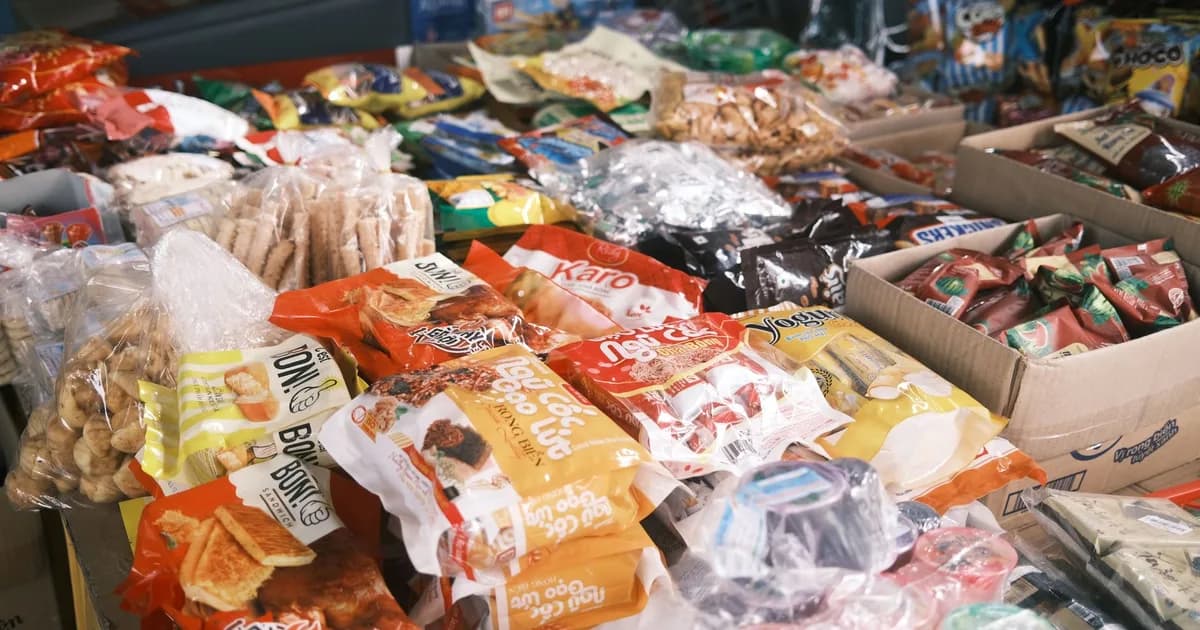
Crackers and cookies share a shelf problem most dry grocery categories don't have: the packaging crushes. A cracker and cookie aisle planogram that treats boxes like cans — stacked deep, loaded heavy, restocked by shoving the next case in from the back — ends up with a visibly damaged front row by midweek, which is its own kind of lost sale even before anything goes out of date.
Why facing depth needs its own rule here
Most cracker and cookie boxes are light but structurally weak against vertical crushing, especially once a box is partly empty. Stacking more than two deep, or placing anything heavy on an upper shelf directly above a cracker block, invites crushed product that shoppers can see through the box window or feel through the packaging. Shallower, wider facings with more frequent restocking from the back tend to outperform deep-stacked facings that look fuller on paper but degrade faster in practice.
Separating crackers from cookies without losing the adjacency
Crackers and cookies get grouped on one aisle run more for space-planning convenience than because shoppers treat them as the same purchase. Within that shared run, a clear visual break — different shelf strip color, a sign, or simply a clean gap — keeps "I want something savory" and "I want something sweet" shoppers from having to scan through the wrong half of the aisle first.
Planning around the category's specific friction points
- Resealable packaging needs a facing orientation that keeps the closure visible, since it's a genuine purchase driver for shoppers buying for extended snacking rather than one sitting.
- Specialty and diet-specific crackers (low-sodium, gluten-free, high-fiber) deserve a clearly labeled sub-block rather than being scattered by brand, since these shoppers are searching by dietary need first.
- Seasonal cookie assortments (holiday tins, themed boxes) need a planned exit date, not just an entry plan — a tin still on shelf a month after the season ends looks stale and signals a reset that hasn't happened.
- Multipack versus single-box formats compete for the same linear space — check which format actually drives more category revenue per facing before defaulting to whichever one looks better stacked.
See spice rack planogram for a related breakdown that often comes up alongside this. This pairs naturally with candy aisle planogram, which tackles a closely related piece of the same problem. This overlaps with pasta and sauce aisle planogram, which is worth checking if that's also part of your situation.
FAQ
How many cases deep should cracker and cookie facings be stocked?
Keep it shallow enough that restocking doesn't require pressing new stock against the front row — generally one to two deep is safer than three or more for anything in a flexible or lightly structured box.
Should crackers and cookies always share one aisle?
It's the common default for space efficiency, but if either category is large enough to need a full aisle on its own in a particular store, splitting them with clear end-of-aisle signage usually beats forcing both into a cramped shared run.
What's the biggest restocking mistake in this category?
Loading from the front instead of the back. It's faster in the moment but crushes the product shoppers are about to pick up and leaves the oldest stock buried behind newer boxes.


