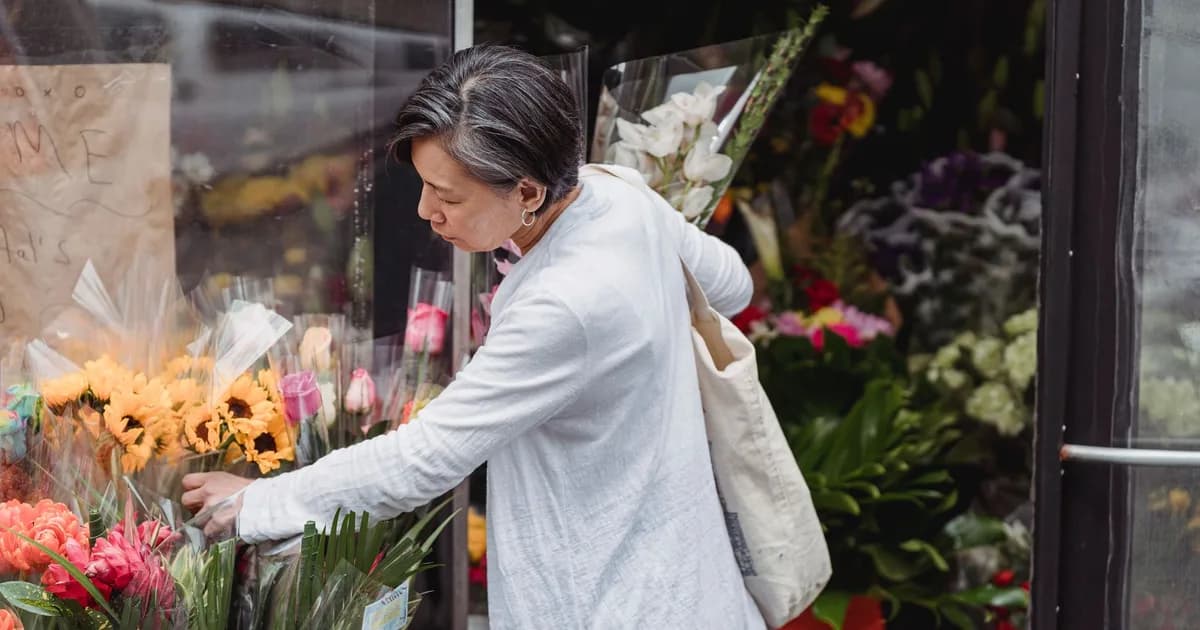
Floral is a genuine impulse category for most grocery and general merchandise shoppers — almost nobody arrives with "buy flowers" as the sole reason for the trip, but a well-placed display converts a meaningful share of shoppers who weren't planning to buy at all. A floral department layout has to capture that impulse opportunity while managing a product that's visibly, continuously decaying in a way almost nothing else in the store is.
Placement decisions that drive impulse conversion
Floral sections positioned near a store's entrance or along a main traffic path tend to outperform ones tucked into a corner, simply because visibility drives impulse purchases more directly here than in almost any other category — a shopper has to see the flowers to be reminded they might want some. This is part of why floral so often sits right at or near the front of grocery stores, competing for some of the same prime entry real estate as produce.
Rotation and visible freshness as a layout problem, not just a staffing one
Unlike almost anything else merchandised at retail, floral product visibly ages hour by hour, and a bucket of flowers past its best looks actively worse than an empty space would. The layout needs to make rotation physically easy — buckets and displays staff can quickly check, reposition and cull from, rather than a dense, hard-to-access arrangement that discourages frequent checking.
Planning considerations specific to this department
- Water and drainage requirements constrain where floral displays can physically go, more like produce than like dry grocery — the layout has to work with available plumbing and drainage, not just open floor space.
- Bundled and pre-arranged bouquets sell differently than loose stems, and benefit from being merchandised as a distinct, clearly priced block rather than mixed randomly with loose-stem buckets, since the purchase decision and price expectation differ.
- Seasonal and occasion-driven spikes (holidays, Mother's Day, graduation season) need planned secondary display space, since trying to squeeze holiday volume into the permanent floral footprint usually looks cramped and undersells the occasion.
- Add-on items (vases, floral food packets, greeting cards) placed directly adjacent capture a natural attachment sale that's easy to miss if those items are merchandised elsewhere in the store instead.
This is closely tied to produce department layout, and the two often need to be solved at the same time. If this is a recurring issue in your stores, pasta and sauce aisle planogram covers a closely related angle worth checking. See canned goods and soup aisle layout for a related breakdown that often comes up alongside this.
FAQ
Should floral always be near the store entrance?
It's a strong default because of the impulse-driven nature of the category, but it depends on the store's overall flow — if entrance space is already committed to produce or a decompression zone, a highly visible secondary position along a main aisle can still work.
How often should floral displays be checked and refreshed?
Multiple times a day in most stores, since the visible decline happens faster than almost any other merchandised product — this is a staffing and routine question as much as a layout one, but the layout should make that frequent checking easy, not awkward.
Does floral need refrigeration like other perishables?
Some floral product benefits from cooler conditions, but much of a grocery floral display is designed to sit at ambient temperature for shopper accessibility — the specific setup varies by what's being sold and should be planned with the actual product mix in mind.


