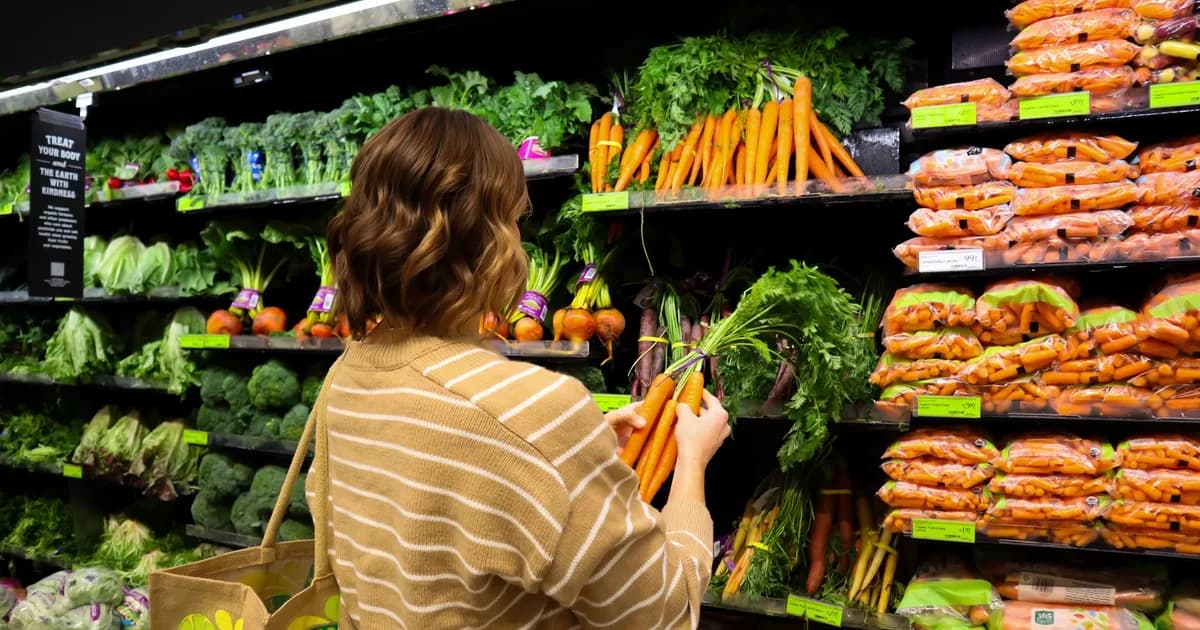
Produce is one of the few departments in a store that rarely gets planned with a literal fixture-by-fixture planogram the way packaged grocery does. The product is irregular, perishable and often displayed in open bins and tables rather than on standard shelving. But a produce department layout still follows the same underlying logic as any other planogram — grouping, sequencing and zone sizing driven by what actually sells and how shoppers move through the space — it just has to apply that logic to a much less standardized fixture set.
Zoning by shopper behavior, not alphabetically
Produce departments tend to work best zoned around how shoppers actually build a basket: everyday staples (bananas, apples, potatoes, onions) positioned where they're easy to grab quickly, and more considered or specialty items (fresh herbs, exotic fruit, specialty greens) positioned where a shopper browsing has room to slow down and look. This is closer to occasion-based blocking than the alphabetical or brand-based logic that works in packaged grocery.
Why entry sequencing matters more here than almost anywhere else
Produce is frequently the first department a shopper walks into, and what's positioned right at that entry point sets the tone for the whole trip — bright, high-turnover, visually appealing items near the entrance tend to perform better than slower, less visually striking items placed in the same spot. This is the produce-department version of the same decompression-zone thinking that applies at a store's front entrance generally.
Freshness-driven layout decisions that don't apply elsewhere
- Misting and refrigeration zones constrain what can physically sit where, more than almost any dry grocery layout decision — leafy greens and herbs need different environmental conditions than root vegetables or citrus, and the layout has to follow the equipment, not just the merchandising logic.
- Turnover speed drives bin and table sizing in a way that's more visible and immediate than in packaged grocery, since unsold produce doesn't sit quietly on a shelf — it visibly deteriorates, which makes over-facing a slow-moving item a fast, obvious mistake.
- Cross-merchandising with adjacent departments (a recipe-driven display linking produce to a sauce or protein) works especially well here, since produce shopping is often meal-driven rather than brand-driven.
- Restocking frequency is much higher than packaged grocery, often multiple times a day for fast-turning items, so the layout needs clear back-of-case or back-of-bin access for staff, not just an attractive shopper-facing side.
This overlaps with floral department layout, which is worth checking if that's also part of your situation. A closely related question is pasta and sauce aisle planogram, which tends to come up around the same time. This connects to canned goods and soup aisle layout — the two are usually worth planning together.
FAQ
Does produce need a formal planogram at all?
Most stores use a looser layout plan rather than a strict facing-by-facing planogram, but the underlying principles — zoning by shopper behavior, protecting space for high performers, planning entry sequencing — still apply even without a rigid document.
How often does a produce layout need to change?
More often than most packaged grocery categories, since seasonal availability genuinely shifts what's being sold, not just what's being promoted — a layout built around summer stone fruit needs rethinking once that season ends.
Should organic produce have its own section or be integrated throughout?
Both approaches exist and work for different stores — a dedicated organic section makes it easy for loyal organic shoppers to shop quickly, while integration can drive more trial from shoppers who weren't specifically looking for the organic option.


