Planogram rules of thumb are the simple guidelines experienced space planners apply before any detailed analysis: group by how shoppers decide, best sellers at eye level, heavy items low, every product holds a case pack plus sales between refills, leave finger space, keep blocks continuous, and never let a plan exceed what the fixture can physically hold. They are not laws, but breaking one should always be a deliberate choice.
Here are twelve, with the reason behind each.
Rules about shopper logic
1. Group by the shopper's first decision. If people choose by type first, group by type; if by brand, block by brand. See brand blocking planogram.
2. Keep one order across the category. If sizes run small to large left to right in one bay, they should in every bay.
3. Put related items together. Pasta near sauce, cereal near cereal bars, mixers near soft drinks. Adjacency helps baskets grow.
Rules about vertical placement
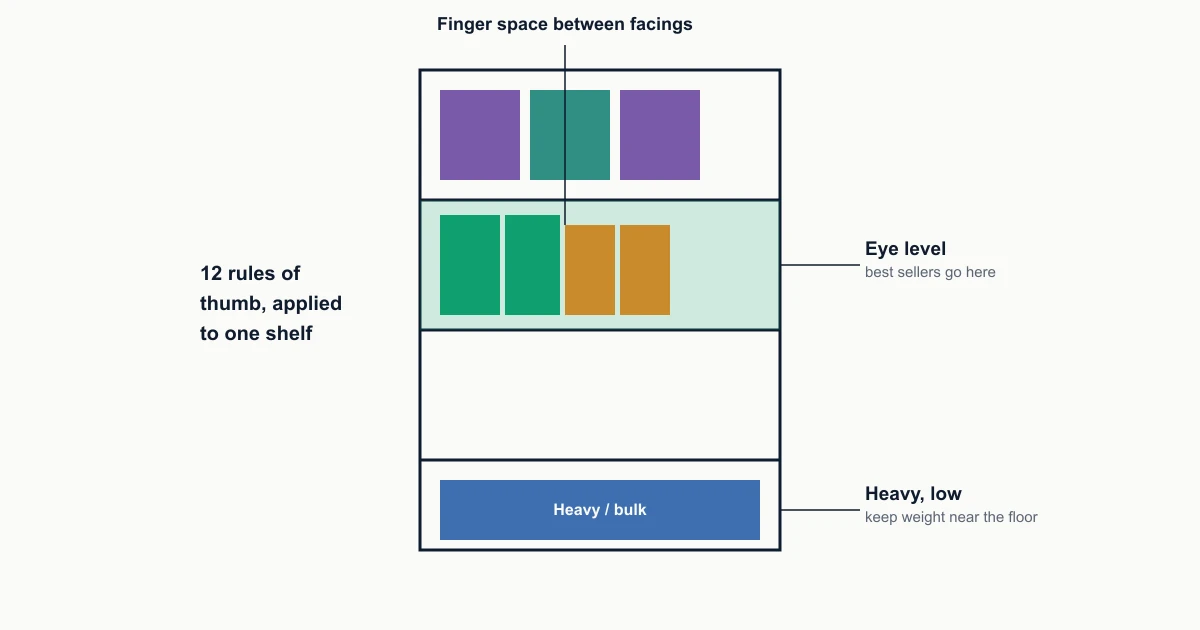
4. Best sellers and key margin lines at eye level, roughly 120–160 cm (47–63 in), inside their blocks. See shelf zones explained.
5. Heavy and bulky items low. Safer to lift, and base shelves are usually deeper and stronger.
6. Small items higher, large items lower. Small packs are easy to see on upper shelves; large packs dominate the view when placed high.
Rules about capacity
7. Hold at least one case pack plus sales between refills. Otherwise the shelf empties or stock sits in the backroom. See product facings.
8. At least two facings for anything shoppers look for. One narrow facing is easy to miss and looks out of stock quickly.
9. Leave 1–2 cm (about ½–¾ in) of finger space above the tallest product on each shelf so it can be lifted out.
Rules about the fixture
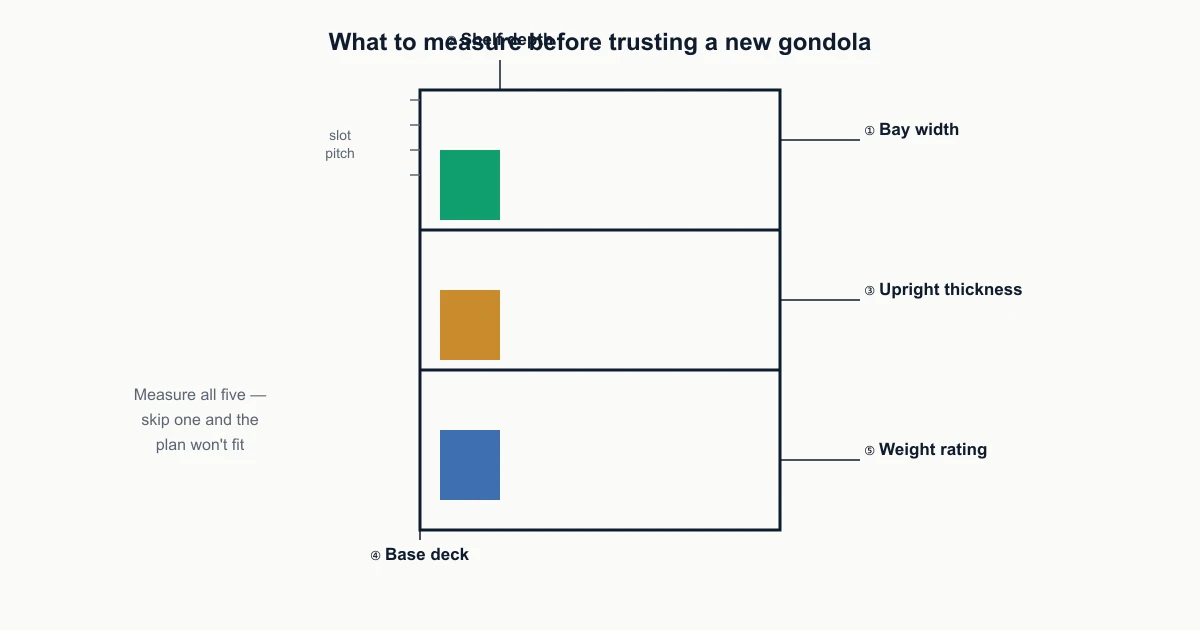
10. Measure the real fixture. Inside widths, shelf depths and clearances differ from catalogue sizes.
11. Keep within load limits. Heavy categories must respect shelf ratings; stacked goods must be stable, as OSHA's rule on material storage requires.
12. Do not split a block across an upright unless it is deliberate. A brand that breaks at the bay edge looks like two brands.
When to break planogram rules of thumb
- Destination products can sit lower; shoppers will find them anyway.
- Promotions may override shelf logic for a few weeks, on displays rather than in-aisle where possible.
- Branded fixtures follow the supplier agreement.
- Very small shops may group by need (breakfast, cooking) rather than by category.
Write the exception on the plan so it is a decision, not drift.
Rules first, analysis second
Planogram rules of thumb will not replace sales data, but they catch most errors before anyone opens a spreadsheet. Apply them on the first draft, use data to tune facings and positions, and record every exception. Rule-based layout tools apply the same guidelines automatically. Background reading: Wikipedia's planogram entry.
FAQ
What is the most important planogram rule?
Grouping products the way shoppers decide. Every other rule works inside that structure.
Why do heavy products go on the bottom shelf?
They are safer and easier to lift from low down, and bottom shelves are usually deeper and stronger.
How many facings should a product have at minimum?
Enough to hold a case pack plus sales between refills, and usually at least two for products shoppers search for.
Do planogram rules apply to small shops?
Yes. The same basics, eye level for best sellers, heavy items low and enough facings, work on a single shelf.