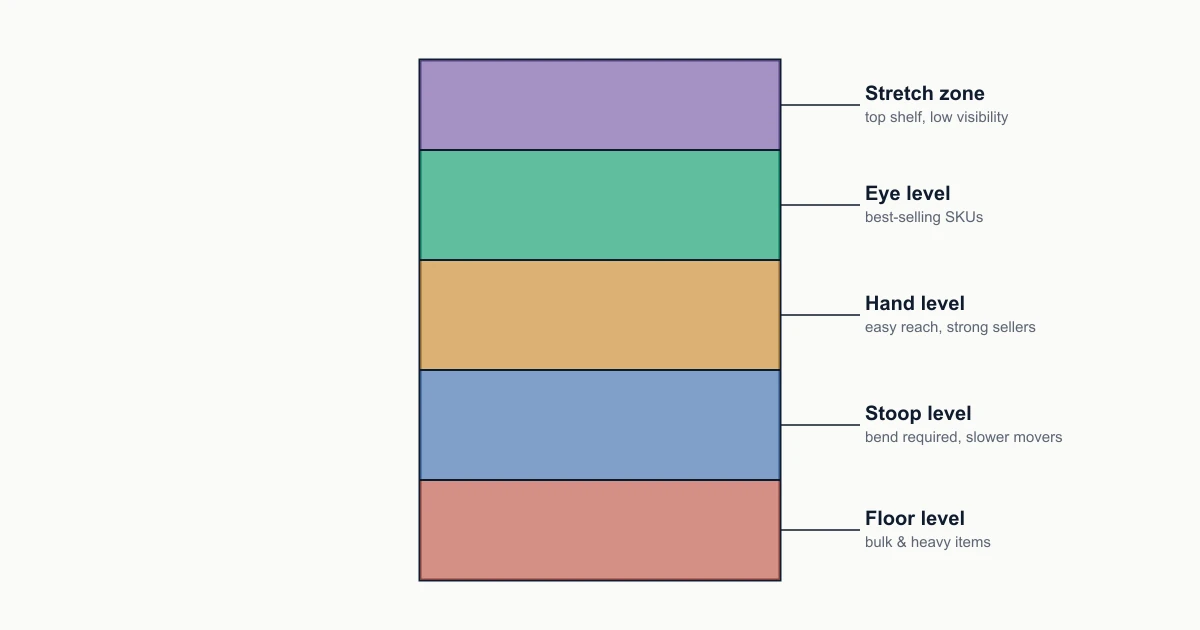
Shelf zones divide a fixture into height bands by how easily shoppers see and reach them: stretch level (top), eye level (often around 120–160 cm, 47–63 in), touch or reach level (waist height) and stoop level (bottom). Best sellers and key margin items usually go at eye level, heavy and bulky packs at stoop level, and slower or niche lines at stretch level.
The exact heights depend on the fixture and on who shops there. A children's cereal aisle and a wine aisle have different "eye levels" for the people they are designed for.
The four shelf zones
| Zone | Approx. height | Visibility | What usually goes there |
|---|---|---|---|
| Stretch | Above about 160 cm (63 in) | Seen, less reached | Light, slower items, overflow, larger packs of niche lines |
| Eye (buy) level | About 120–160 cm (47–63 in) | Seen first | Best sellers, high-margin lines, launches |
| Touch / reach | About 80–120 cm (31–47 in) | Easy to reach | Steady sellers, items shoppers come for anyway |
| Stoop | Below about 80 cm (31 in) | Lowest attention | Heavy, bulky and value packs; destination items |
Treat these as starting points. Measure your own fixtures and watch how shoppers actually reach.
Why eye level is called "buy level"
Shoppers scan a shelf briefly, and the band in front of their eyes gets the most attention. Products there are found faster and compared first, which is why retailers and suppliers compete for it, and why it often costs more in negotiations. Our guide to brand blocking shows how vertical blocks give every brand a share of it.
When eye level is the wrong place
- Destination products. Items shoppers will look for anyway, such as a staple flour or the leading detergent, can sit lower and leave eye level for products that need to be discovered.
- Heavy items. 5 L bottles or 10 kg bags are safer and easier to lift from low shelves.
- Children's products. Their shoppers' eye level is lower; many retailers set policies about what may sit at child height.
- Price tiers. In value-led layouts, premium at eye level and value at stoop level is deliberate, but it should be a choice, not a habit.
Using shelf zones in a planogram
- Set shelf heights first, so the zones are real on your fixture.
- Rank products by sales and margin.
- Fill eye level with the products that earn it, inside their blocks.
- Put heavy, bulky and family packs at stoop level.
- Use stretch level for light, slow lines and secondary sizes.
- Check each shelf's clearance and capacity; a product at eye level that keeps running out wastes the best space in the bay.
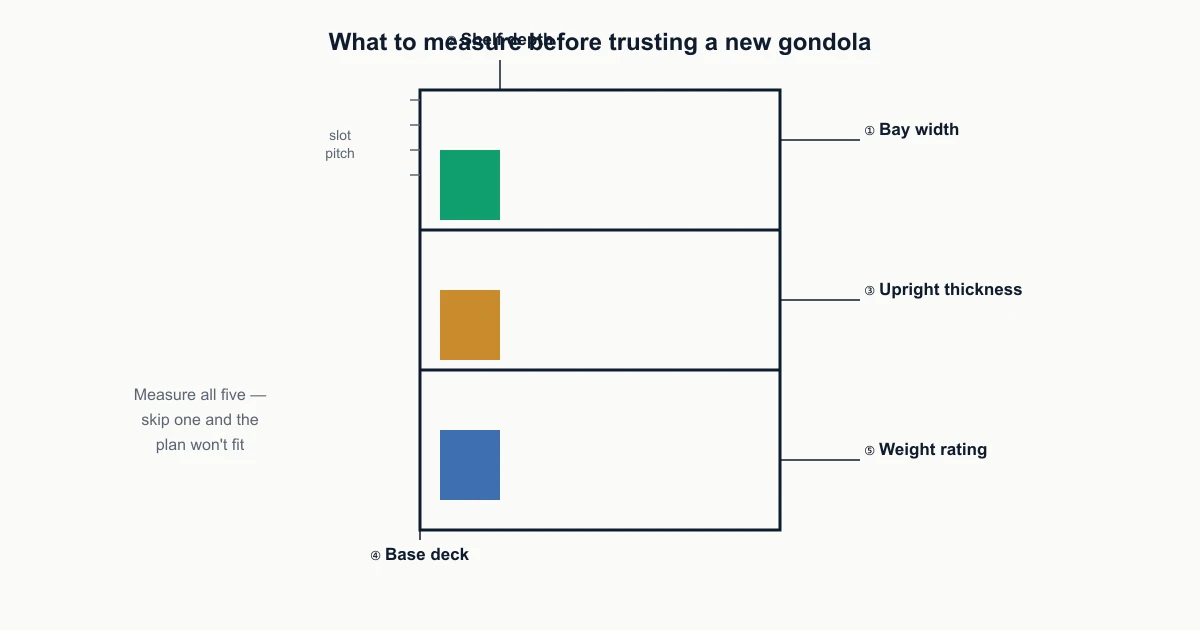
Shelf heights and slot positions vary by fixture, so the gondola shelving guide is a useful companion.
Zones on other fixtures
- Chillers: the same logic applies door by door; single-serve drinks usually take eye level.
- Peg walls: eye-level rows hold the most-searched items; heavy items hang low.
- Checkout units: the zone is set by queue height and policy, not by the full shelf range.
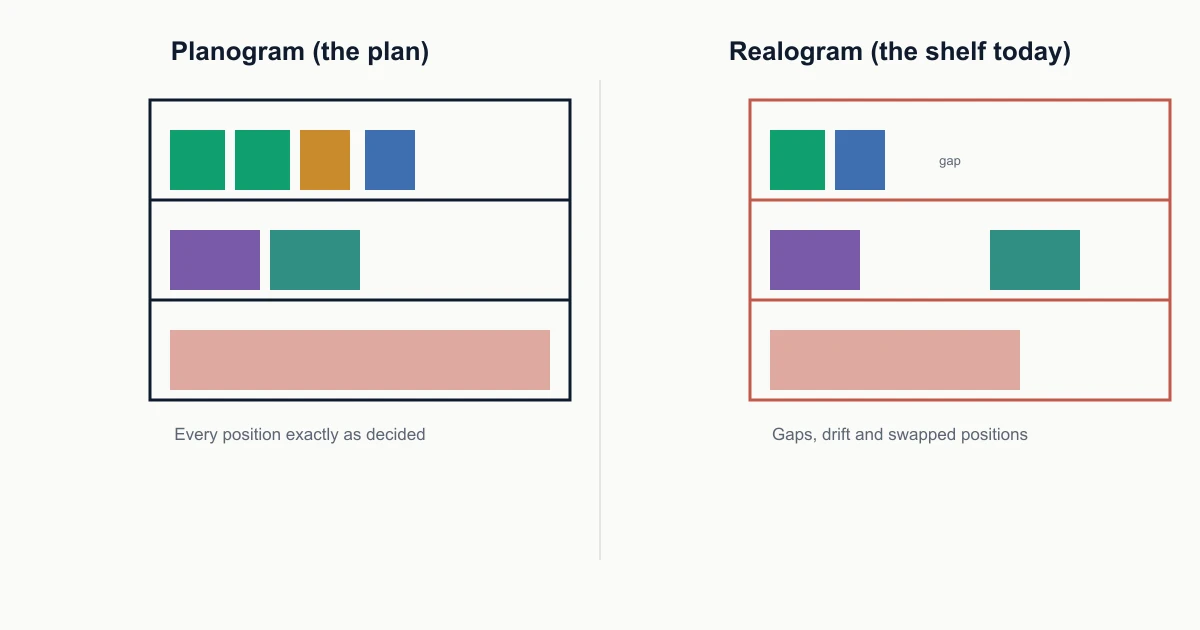
Our planogram examples show these zones on seven different fixtures.
Earn the eye-level band
Shelf zones are a simple idea with a real effect: the height of a product decides how often it is seen. Give the eye-level band to products that need visibility and sell fast enough to justify it, keep heavy things low, and treat every zone as space that should earn its place. Wikipedia's visual merchandising entry and its planogram entry give more background on placement.
FAQ
What height is eye level on a retail shelf?
Often around 120–160 cm (47–63 in) from the floor, but it depends on the shoppers and the fixture. Measure and observe in your own stores.
What goes on the bottom shelf in a store?
Heavy, bulky and value packs, and destination products shoppers will look for anyway.
Is eye level always the best shelf?
For products that need to be seen and chosen, yes. For heavy items or products shoppers already seek out, a lower shelf is often better.
What is the stretch level on a shelf?
The top band, above eye level, which shoppers see but reach less often. It suits light, slower-moving items.