What is a fixture in retail? It is any physical unit a store uses to hold or display products: gondola shelving, wall shelves, chillers, freezers, peg walls, racks, counters and display stands. In planogram work, the fixture is the starting point of every plan, because its width, depth, shelf heights and type decide what fits and where.
Retailers sometimes distinguish fixtures (permanent or semi-permanent units) from fittings or displays (movable or temporary units), but in everyday planogram language "fixture" covers both.
Eight common types of retail fixtures
| Fixture | Typical use | What the planogram must know |
|---|---|---|
| Gondola | Centre aisles of grocery and convenience stores | Bay width, shelf depths, shelf heights, back panel type |
| Wall shelving | Perimeter walls | Same as gondola, one-sided |
| Chiller / cooler | Drinks, dairy, chilled food | Door width, shelves per door, airflow limits, light/fan housings |
| Freezer | Frozen food, ice cream | Chest or upright, basket sizes, lid type |
| Peg wall / pegboard | Hanging items: accessories, hardware, cosmetics | Hole pitch, hook lengths, board size |
| Racks and spinners | Cards, small items, clothing | Arms or pockets, rotation, height |
| Counter and checkout units | Impulse items | Tray sizes, queue height, policies |
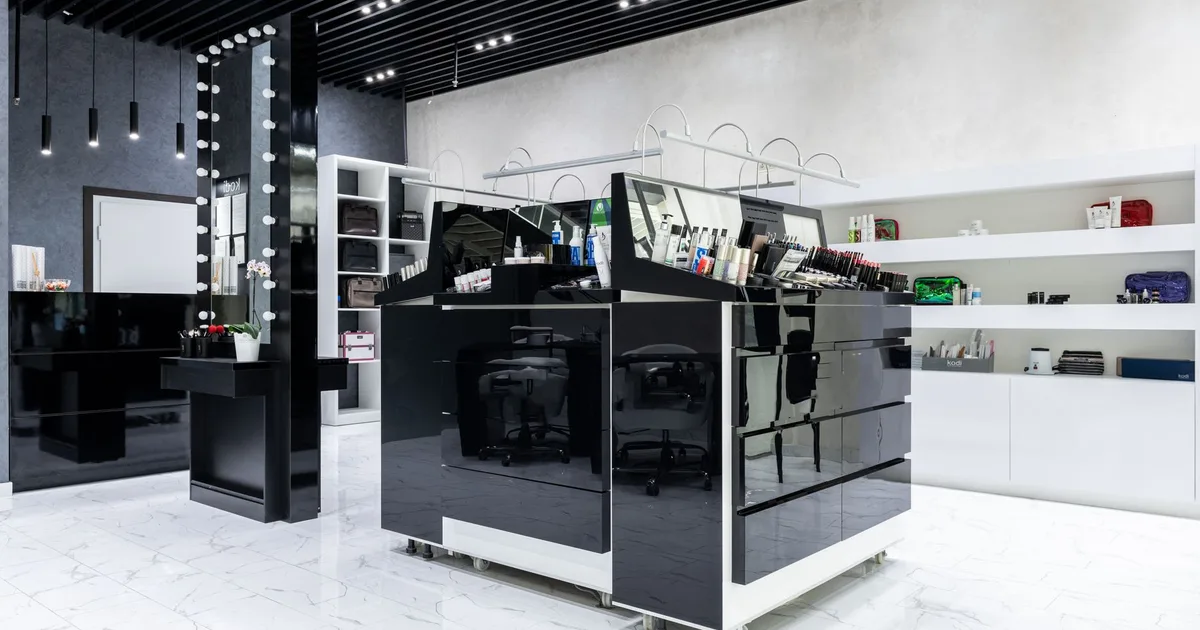
| Display stands and end caps | Promotions, launches | Shelf count, stack limits, signage space |
Each type has its own rules. A peg wall planogram is planned by hole and hook, a cooler by door and shelf, a gondola by bay and slot. See gondola shelving explained and our pegboard planogram guide for two of the most common.
What is a fixture in retail measured by?
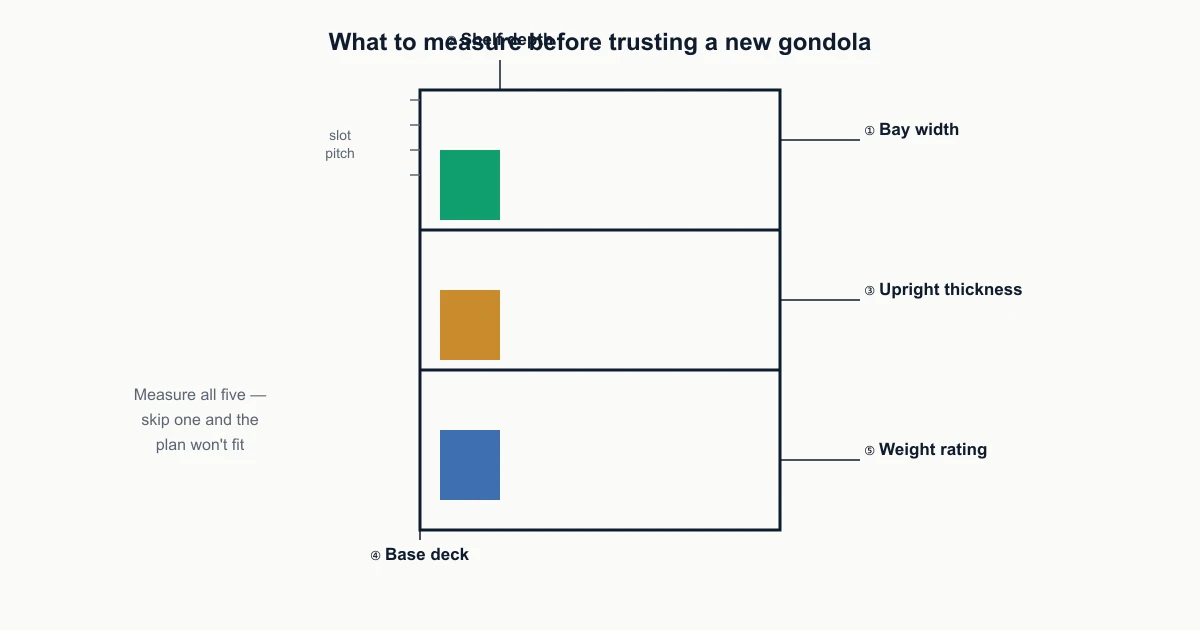
Whatever the type, record:
- usable width inside uprights or walls
- depth of each shelf, basket or hook
- heights: of each shelf and clearance between them
- adjustability: slot pitch, movable shelves, hook positions
- load limits, especially for heavy categories
- special constraints: fans, lights, doors, lids, price-strip channels
These numbers belong in a fixture library, stored once and reused for every planogram on that fixture type.
Why fixtures cause most planogram failures
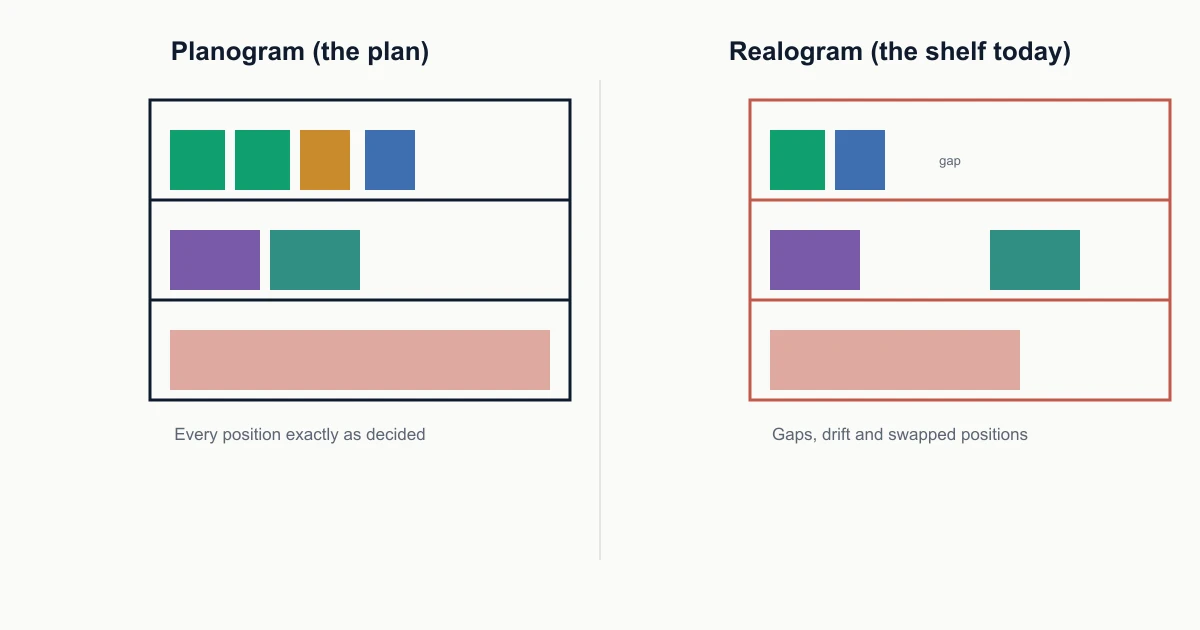
When a plan does not fit, the cause is usually a fixture mismatch:
- the plan assumes 120 cm bays; the store has 100 cm
- the plan assumes five shelves; the store has four
- a chiller has a fan housing that blocks the top shelf
- the base deck is shallower than in the catalogue
Keeping accurate fixture data for each store or cluster prevents most of these. Our guide to planogram compliance shows how fit problems show up as low compliance.
Fixtures and safety
Fixtures have load ratings and must stay stable. Heavy products belong low, and stacked goods must not be able to slide or fall, a principle set out in OSHA's general rule on material storage. Planograms should never ask a fixture to carry more than it is rated for.
Plan the fixture before the products
So, what is a fixture in retail in planogram terms? It is the frame every plan has to fit. Measure it, record it, keep the data per store, and the products placed on it will fit first time. Wikipedia's gondola entry is a short introduction to the most common type.
FAQ
What are retail fixtures?
Units used to hold or display products in a store, such as gondolas, wall shelves, chillers, freezers, peg walls, racks and display stands.
What is the difference between a fixture and a display?
A fixture is usually permanent or semi-permanent, like a gondola or chiller. A display is often temporary or movable, like a promotional stand. Many teams use "fixture" for both.
Why do planograms need fixture dimensions?
Because width, depth and shelf heights decide how many products fit and where. A plan built for the wrong fixture cannot be executed.
What is a fixture library?
A stored set of fixture types and their dimensions, reused whenever a planogram is built for that fixture.