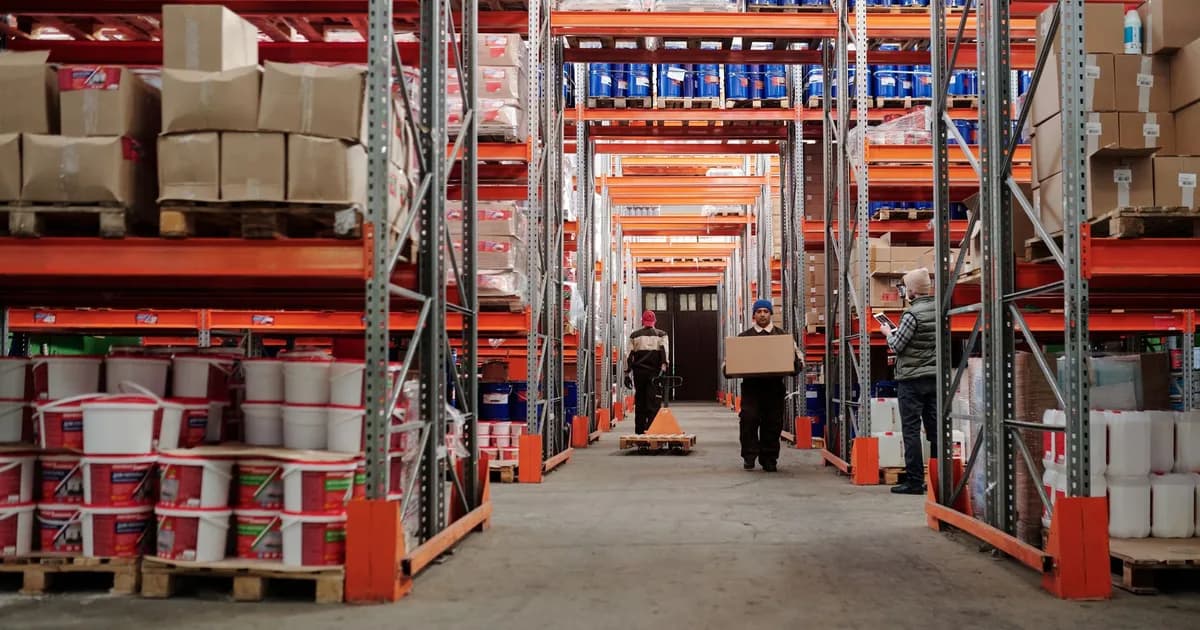
Club store assortment runs dramatically narrower than a comparable grocery or big-box footprint — often one or two options per category instead of a dozen. This isn't a limitation the format is working around; it's a deliberate strategic choice that the entire club business model is built on.
The logic behind the narrow assortment
Fewer SKUs mean deeper volume per item, which supports club-level pricing. Concentrating purchasing power behind a small number of SKUs per category lets a club retailer negotiate better per-unit costs than spreading the same budget across many options — the savings get passed on as the club's core value proposition.
A smaller SKU count simplifies pallet-based merchandising. As covered elsewhere, club stores are built around pallet-scale display rather than shelf facings — a narrow assortment is what makes pallet-based merchandising practical at all, since each SKU needs a real floor footprint, not a shelf facing.
It reduces decision fatigue for a specific kind of shopper. Club shoppers are often making a bulk, stock-up decision rather than browsing for variety — fewer, well-vetted options can actually support faster decisions for this shopper mission, compared to the extensive choice architecture of a full-assortment grocery store.
It lowers labor and inventory complexity at scale. Managing deep inventory on a small number of SKUs is operationally simpler than managing shallow inventory across a wide assortment, which matters given the generally leaner staffing models clubs operate with relative to their square footage.
What this means for a brand trying to get into club retail
Getting a listing in a club format is often harder than in traditional grocery precisely because there are fewer slots per category — a brand is competing for one of perhaps two or three available positions, not one of a dozen. This raises the bar for what a club buyer needs to see before allocating one of those limited slots.
Implications for planning
- A club listing decision tends to be higher-stakes and less frequent than a traditional grocery space negotiation, given how few slots exist per category.
- Performance data needs to be especially strong, since a club buyer is choosing one or two winners from a category, not allocating incremental facings among many.
- Packaging and pricing need to be built around club-scale volume from the start, not adapted after a traditional retail launch.
This overlaps with club store planograms, which is worth checking if that's also part of your situation. A closely related question is converting a shelf planogram to a pallet layout, which tends to come up around the same time. This connects to convenience store vs supermarket planogram — the two are usually worth planning together.
FAQ
Does a narrow club assortment mean lower sales per category overall?
Not necessarily — concentrated volume behind fewer SKUs, at club pricing, can still produce strong per-category sales, even though the shopper has fewer choices than in traditional grocery.
How many SKUs does a typical club category carry compared to a grocery store?
This varies by category and retailer, but club assortments are consistently and substantially narrower than grocery equivalents — often a small handful of options compared to a dozen or more on a standard grocery shelf.
Is it harder to get delisted from a club assortment than from a traditional retailer's?
Both involve real stakes, but because club slots are so limited to begin with, losing one can represent a larger proportional loss of distribution for a brand than losing shelf space within a much larger grocery assortment.


