Most planogram compliance problems that show up after a reset trace back to something that was never clearly communicated before the reset started, not to the crew working carelessly. Briefing a reset crew properly — before tools come out and boxes start moving — catches ambiguity while it's still cheap to fix, instead of after fixtures are already half-built the wrong way.
What a real briefing covers that a planogram document alone doesn't
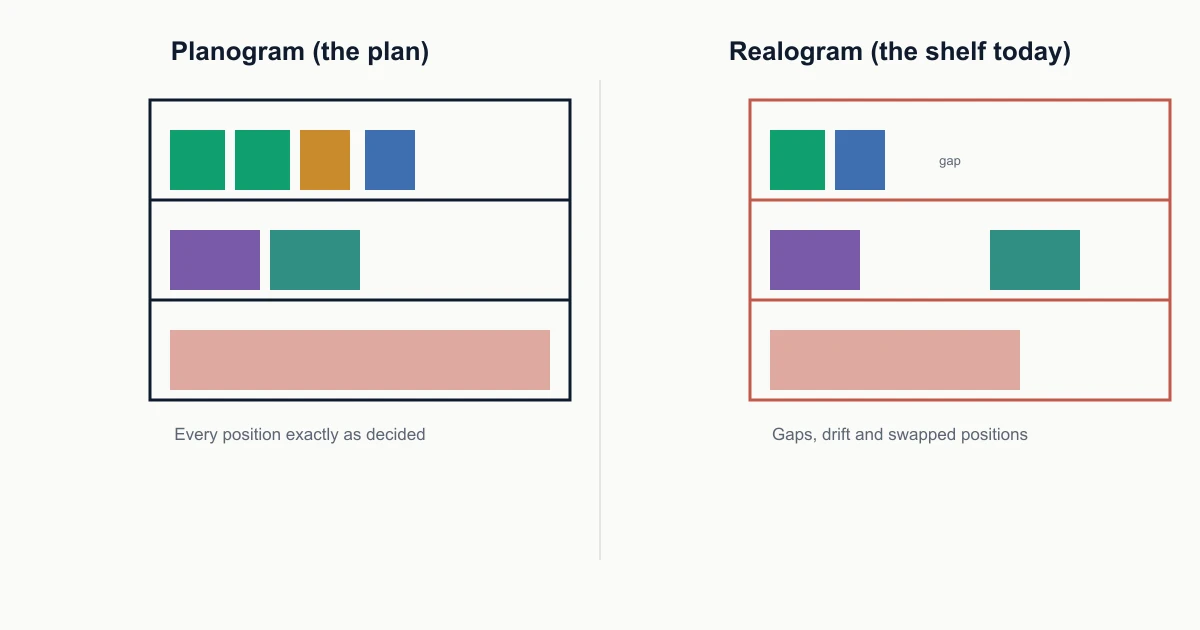
The planogram itself shows the end state. It rarely explains sequencing, exceptions for this specific store, or what to do when something on the plan doesn't match what's actually on the fixture. A proper briefing walks the crew through the plan, flags any known store-specific deviations in advance, and sets a clear escalation path for anything unexpected they find once they start — rather than leaving each crew member to make an individual judgment call mid-reset.
Sequencing instructions prevent the most common wasted time
Telling a crew what the final shelf should look like without telling them what order to tackle sections in often leads to double-handling — product moved once, then moved again once a later section's space requirements become clear. A briefing that specifies build order, especially for categories sharing or competing for adjacent space, saves real time on reset day.
What a solid pre-reset briefing should include
- A walk-through of the planogram itself, not just a printed copy handed over silently — questions surface faster in a live walkthrough than they do from someone reading a document alone under time pressure.
- Known exceptions for this specific store — a shelf height that doesn't match the standard plan, a fixture that's slightly different from what the plan assumes — flagged before the crew discovers them mid-build.
- A clear point of contact for anything unexpected, so an unresolved question doesn't turn into an improvised decision that drifts from the intended plan.
- Expected timing and build order, so the crew isn't guessing at sequencing or discovering space conflicts between adjacent sections partway through.
This connects to what to look for in planogram software — the two are usually worth planning together. Worth checking next: dollar store planogram, which covers a closely related part of the same decision. This is closely tied to hard discounter planogram, and the two often need to be solved at the same time.
FAQ
How long should a reset crew briefing take?
Long enough to walk through the plan and known exceptions without rushing, but focused — a long, unstructured briefing can lose a crew's attention before the actual work starts. A tight, well-organized briefing usually beats a longer unfocused one.
Should the briefing happen the same day as the reset?
It can, but briefing further in advance — even the day before — gives the crew time to ask questions and gives whoever's coordinating time to resolve anything that comes up before reset day itself.
Who should deliver the briefing?
Ideally someone who understands both the planogram's intent and the specific store's quirks — a generic briefing delivered without local store knowledge misses exactly the exceptions that cause the most confusion during the actual reset.