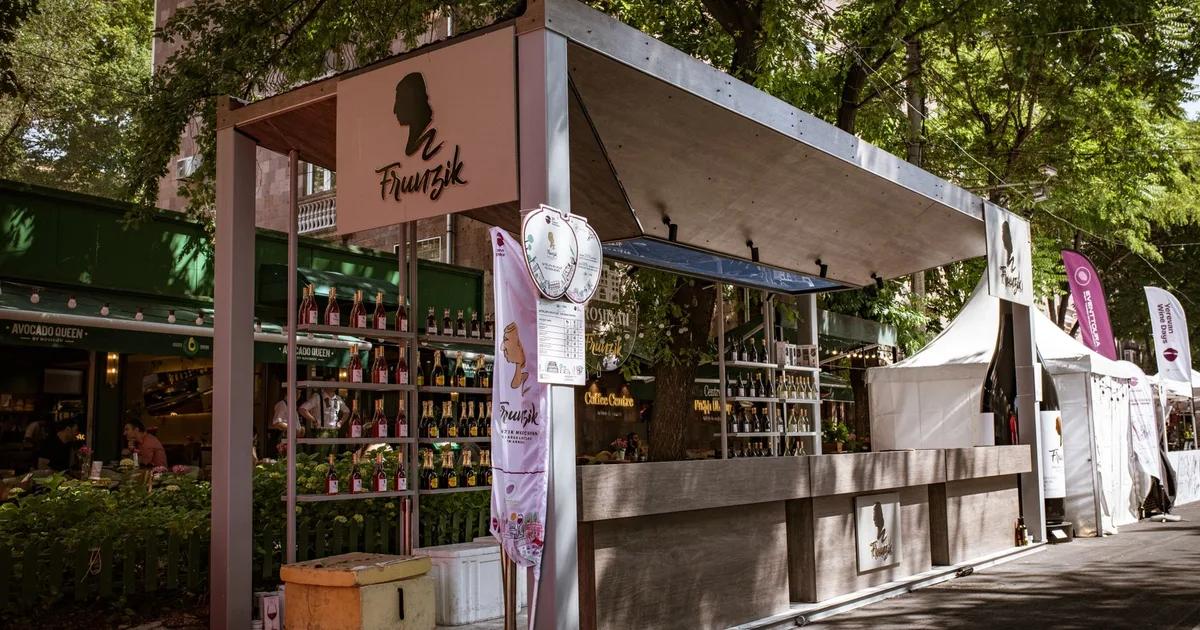
Pop-up store merchandising doesn't have the luxury most of this blog's planning advice assumes — a known, fixed gondola with documented dimensions, a stable fixture that stays in place for months or years. A pop-up often means building a functional layout in borrowed, temporary, or entirely unfamiliar space, sometimes for a run measured in days or weeks.
What's genuinely different about this environment
The space itself is often unknown until shortly before opening. Unlike a standard store where fixture dimensions are documented and stable, a pop-up location may only be confirmed and measured a short time before the store needs to open, compressing the planning timeline significantly.
Fixtures are usually modular and portable, not permanent gondolas. Pop-up merchandising typically relies on modular shelving, portable racks, or temporary display units designed to be assembled, broken down, and potentially reused at a different location — the planning unit is closer to a kit of parts than a fixed fixture.
The layout has to work with minimal lead time for correction. A permanent store has time to iterate on a layout across multiple resets. A pop-up often gets one shot at a reasonably correct layout before the location's limited run is already underway.
Brand storytelling often matters more than pure sales-per-square-foot optimization. Many pop-ups exist partly as a marketing and brand-experience exercise, not purely a sales-maximization exercise — this can shift the merchandising priorities toward experience and visual impact in ways a standard planogram wouldn't weight as heavily.
Approaching pop-up merchandising differently
Plan with flexible, modular units designed for fast assembly and adjustment, rather than assuming a fixed-dimension fixture the way a standard planogram does.
Confirm the actual space as early as possible, and build a layout plan that can adapt to minor last-minute dimensional surprises, since the margin for a full redesign is much smaller than in permanent retail.
Prioritize the highest-impact, most photogenic or story-driven placement decisions first, if brand experience is a meaningful part of the pop-up's purpose, rather than defaulting purely to standard sales-optimization logic.
Build in a fast feedback loop during the limited run, since there's little time for a full category-review-style iteration — quick, informal adjustments based on how the first days actually go matter more here than in a long-running permanent category.
See club store planograms for a related breakdown that often comes up alongside this. This pairs naturally with decompression zone, which tackles a closely related piece of the same problem. This overlaps with convenience store vs supermarket planogram, which is worth checking if that's also part of your situation.
FAQ
Can standard planogram principles (adjacency, sequencing, facings) still apply to a pop-up?
Yes, the underlying shopper-logic principles still hold — the main difference is the physical planning unit (modular, portable fixtures instead of fixed gondolas) and the compressed timeline for planning and adjustment.
How much lead time is realistic for planning a pop-up layout?
This varies enormously by the specific opportunity, but pop-up planning timelines are generally much shorter than permanent store planning, which is why flexible, quickly adaptable fixture systems are especially valuable in this context.
Should a pop-up's layout prioritize sales efficiency or brand experience?
This depends on the pop-up's actual purpose — a primarily sales-driven pop-up should lean toward standard merchandising optimization, while a brand-experience-focused pop-up may reasonably trade some sales efficiency for a more memorable, story-driven layout.


